How to Choose a Hair Transplant Clinic UK
Home › Hair Transplant Blog › Choosing a Hair Transplant Clinic
How to Choose a Hair Transplant Clinic
A polished website and a low graft price do not show who will operate or whether the donor plan is safe. Check the treatment location, regulated provider, named surgeon, consent process, written quote, aftercare and complaints route before paying.
Contents [show]

Check the Clinic Before the Clinic Checks Your Hair
Hair transplantation is surgery. A decision made from advertising alone can leave a patient with an unsuitable hairline, depleted donor area, visible scarring, poor growth or difficulty obtaining follow-up care.
Due diligence does not mean choosing the clinic with the most badges or five-star reviews. It means linking every important claim to a named person, registered organisation, exact location or written term that can be verified independently.
A BBC investigation into poor practice shows why it matters to establish who is responsible for your care before discussing discounts, dates or graft packages.

Check CQC Registration and the Surgeon’s GMC Entry
Care Quality Commission
The NHS says independent clinics and hospitals providing cosmetic surgery in England must be registered with the Care Quality Commission. Search the exact place where surgery will occur and the provider legally responsible for it.
A registered office, consultation room or national brand page may not be the treatment location. Compare the address on the CQC record with the address on your consent form and invoice. Read the current provider details and inspection information rather than relying on a logo.
General Medical Council
Doctors practising in the UK must be registered with the GMC and hold a licence to practise. Search the surgeon’s full name and number directly on the medical register. Dr Harpreet Kalra’s GMC reference is 7126076.
GMC registration and CQC registration are separate. One concerns the doctor; the other concerns the regulated service or location. Neither is a rating of cosmetic results, so experience, planning and outcome evidence still need examination.
Find Out Who Performs Each Surgical Stage
Ask for the operating doctor’s name before the day of surgery. Do not accept “our medical team” as the only answer. The person shown in advertising may not be the person who assesses, consents or operates.
Questions about FUE
- Who decides the safe donor area and extraction pattern?
- Who administers local anaesthetic?
- Who makes the punch incisions and removes grafts?
- Who creates recipient sites and controls hair direction?
- Who places and checks the grafts?
Questions about FUT
- Who plans and removes the donor strip?
- Who closes the wound and chooses the closure method?
- Who dissects and prepares follicular units?
- Who creates recipient sites?
- Who handles wound review and suture or staple removal?
The British Association of Hair Restoration Surgery states that surgical steps should be performed by appropriately licensed doctors. Ask the clinic to explain operator roles in writing.
Expect a Surgeon-Led Consultation and Time to Reflect
The GMC’s guidance for doctors offering cosmetic interventions requires the doctor performing the procedure to take responsibility for consent, discuss outcomes, benefits and risks, and give the patient time to reflect. A sales call is not a substitute for that consultation.
What should be discussed
The surgeon should review the diagnosis, alternatives, option of no treatment, method, scars, likely limitations, recovery, complications, future hair loss and who provides aftercare. Ask what would make the surgeon advise against operating.
Do not rely on a same-day decision
Pressure based on a cancellation slot, expiring discount or travel deadline is a reason to pause. Keep copies of the consent document and treatment plan, and read them away from the clinic.
Medical history matters
Disclose regular medicines, allergies, smoking or nicotine use, previous surgery, scalp conditions and health issues that affect bleeding or healing. Hiding information to secure a booking can make surgery less safe.
Questions need direct answers
Ask the operating surgeon, not only a coordinator, about complications, donor limits and the expected result. If the answer changes between consultation and surgery day, reconsider before proceeding.
Demand a Diagnosis and Donor-Hair Plan
A hair transplant moves existing follicles. The donor area is finite, and the operation does not stop native hair from thinning. A safe plan cannot be produced from the recipient photograph alone.
Diagnosis
Pattern hair loss, diffuse thinning, traction, alopecia areata, scarring alopecia and temporary shedding need different management. Sudden loss, patchy loss, itching, pain, scaling or inflammation may require medical investigation before cosmetic surgery.
Donor assessment
Ask how density, miniaturisation, hair calibre, curl and previous extraction were measured. The surgeon should explain the proposed safe donor zone and the amount reserved for future needs.
Graft estimate
The estimate should relate to a measured area and agreed design. Extremely high numbers can be a sales tactic if donor limitations are ignored. Ask what the clinic counts as a graft and what will happen if the available number differs on the day.
Scar plan
FUE leaves many small circular scars; FUT leaves a linear scar. Existing scars can alter harvesting and recipient growth. No method can promise an invisible donor area.
Read the donor-area guide, hairline planning guide and crown transplant guide.
Read Reviews and Before-and-After Images Critically
Patient photographs
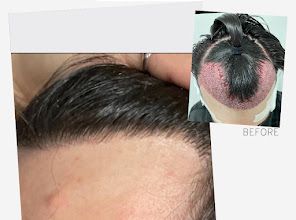
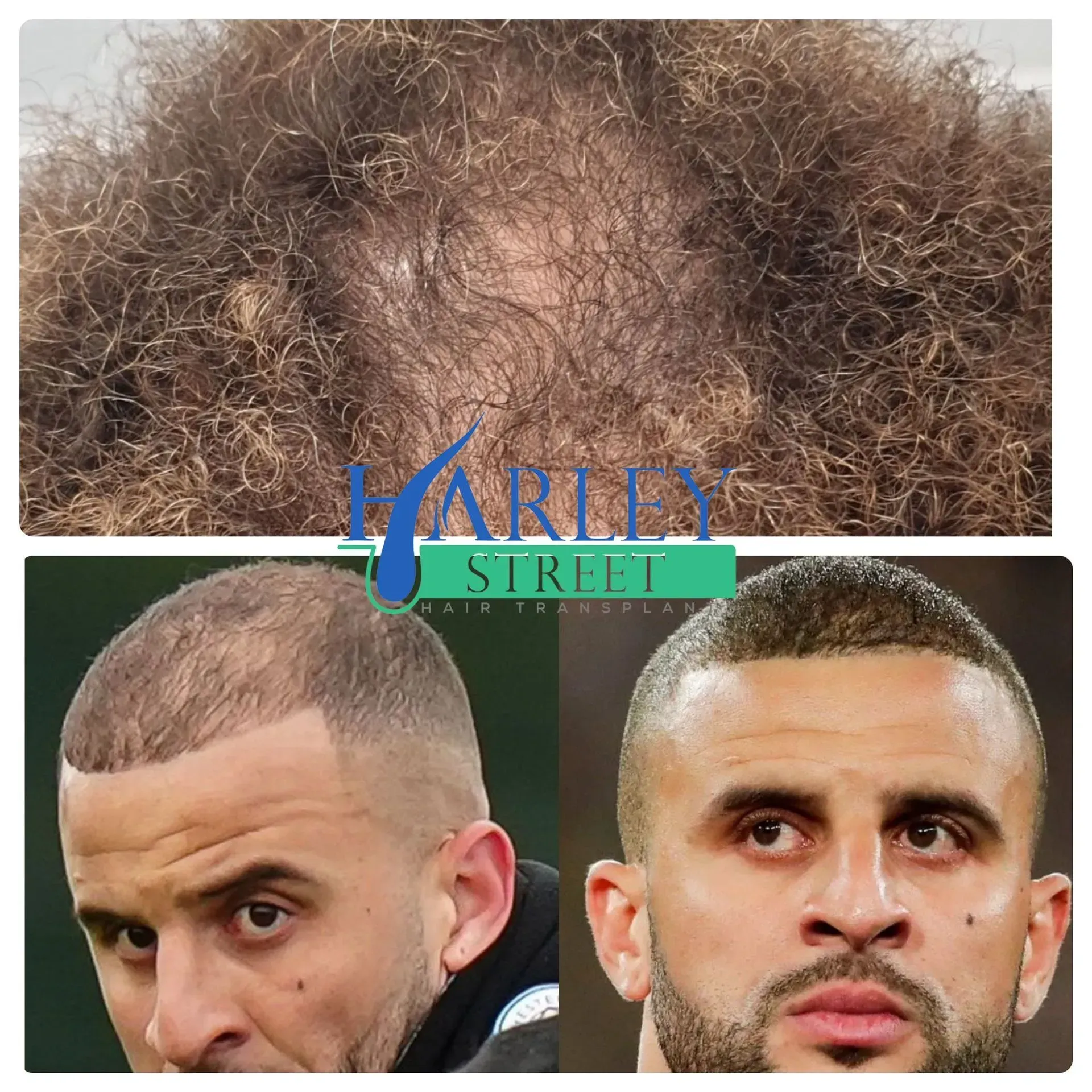
Ask for cases with a similar pattern, hair type and graft range. Look for consistent lighting, angle, hair length and styling. Wet-versus-dry or harsh-versus-soft lighting can exaggerate a change. Confirm how many months passed between images.
A good result in one patient does not forecast another. Donor density, calibre, curl, skin, graft survival and future loss affect the appearance.
Reviews
Read recent positive, mixed and negative reviews across more than one source. Look for details about consultation, who performed surgery, communication and the response when something went wrong. A high average score does not replace regulation or consent checks.
Be cautious when reviews repeat identical wording, appear in a short burst or discuss only the booking experience before growth could be assessed.
Marketing claims
Terms such as “scar-free,” “painless,” “unlimited grafts” or “assured density” should stop the conversation. Hair transplantation creates wounds and scars, local anaesthetic injections can be uncomfortable, donor supply is limited and graft growth varies.
Understand the Quote, Deposit and Finance
A written quote should identify the procedure, treatment areas, estimated graft range, surgeon, location, included reviews and any items charged separately. Ask whether the fee changes if fewer grafts can be harvested safely.
Read deposit, cancellation, rescheduling and refund terms before paying. If finance is offered, check the lender, broker, total repayable amount, interest, fees and cooling-off rights. Do not let monthly-payment marketing hide the procedure’s full price.
Compare like with like. A cheaper quote may exclude medicines, aftercare or revision, while a higher quote may include services you do not need. Price cannot correct an unsuitable diagnosis or donor plan.
Read the full hair transplant cost guide.
Check Aftercare and Complaints Before Surgery
Early aftercare
Confirm who answers questions about bleeding, swelling, pain, washing, dressings or a knocked graft. You should receive a direct contact route and written instructions for the operation performed.
Longer follow-up
Ask when donor healing, shedding, growth and the final appearance are reviewed. Find out whether appointments are with the surgeon and how patients travelling from a distance are handled.
Problems and revisions
Ask what happens if there is infection, poor growth, visible donor thinning or an unsuitable hairline. Clarify who pays for assessment, medicines, corrective surgery or travel.
Complaints
The clinic should provide a written complaints process with response times and escalation. Keep consent documents, invoices, photographs, messages and operative records.
Read the detailed aftercare guide and ask the clinic for its written complaints policy.
Hair Transplant Clinic Checklist
- Search the exact treatment location and provider on the CQC website.
- Check the operating doctor’s GMC entry and licence.
- Confirm who performs each surgical stage.
- Have the consultation and consent discussion with the operating doctor.
- Understand the diagnosis and why surgery is appropriate.
- Ask how donor density, miniaturisation and safe graft supply were measured.
- Review comparable, standardised patient images.
- Read the full quote, deposit, cancellation and finance terms.
- Obtain the aftercare, urgent-contact and complaints arrangements.
- Take time to reflect and walk away if important answers remain vague.
For Liverpool Hair Transplant Clinics, consultations are led by Dr Harpreet Kalra, GMC 7126076. The clinic address is 2–12 Lord Street, Liverpool L2 1TS. Confirm the treatment location and responsible provider on your individual paperwork.
Choosing a Hair Transplant Clinic: Questions
Does CQC registration mean a clinic is the best?
No. It confirms that the relevant service or location is registered where required. Patients still need to examine the surgeon, treatment plan, consent, outcomes and aftercare.
Is a consultation with a salesperson enough?
No. The operating doctor should assess suitability and take responsibility for informed consent. A coordinator can help administratively but cannot replace the surgeon’s clinical discussion.
Should I choose the clinic offering the most grafts?
No. Graft numbers must be limited by the donor area and long-term plan. An excessive number can create donor depletion without producing natural density.
Are FUE hair transplants scar-free?
No. FUE leaves many small circular donor scars. Their visibility depends on extraction spacing, punch size, skin response, hair length and healing.
Which official checks should I make?
In England, check the treatment provider and location with the CQC and the doctor on the GMC medical register. Ask the clinic to explain any trading names or different addresses.
Use the CQC service search, GMC medical register and GMC cosmetic-intervention guidance.