Home › Hair Transplants › Hairline Transplant
Hairline Transplant Liverpool
Hairline surgery can rebuild recession, soften an existing transplant or change the shape of a naturally high hairline. The design must suit the face today without using donor hair that may be needed if thinning continues.
Consultations are led by Dr Harpreet Kalra, GMC 7126076, at our Liverpool city-centre clinic.
Contents [show]

What Hairline Transplant Surgery Involves
A hairline transplant moves follicular-unit grafts from a suitable donor area, usually at the back and sides of the scalp, into recipient sites across the frontal hairline and temples. The operation can use FUE or FUT harvesting. DHI may be used as an implantation method after the grafts have been obtained.
The extraction label does not create a natural hairline by itself. Shape, height, temple relationship, irregularity, density transition and the angle of each recipient site matter. Single-hair grafts are normally reserved for the leading edge so that larger follicular units do not create an obvious row.
Every harvesting method leaves scars, and recipient placement creates small wounds. The aim is a design that looks believable and uses the donor supply responsibly, not a promise of scar-free surgery or a fixed density.
How a Natural Hairline Is Designed
Height and proportions
The lowest possible line is rarely the safest line. A low design uses more grafts and can become difficult to support if hair behind it recedes. The surgeon considers facial proportions, age, existing hair, likely progression and donor capacity before agreeing the height.
Shape and temporal recession
A mature hairline often retains some temporal recession. The amount varies with the patient’s face and goals. Drawing the same straight template on every forehead can look unnatural and may use grafts where they add little benefit.
Irregularity and density transition
Natural hairlines are not ruler-straight. Small, controlled irregularities and a gradual transition from finer single hairs to greater density behind them can soften the edge. Random gaps are not a substitute for deliberate design.
Direction and curl
Recipient sites need to match the way nearby hair leaves the scalp. Straight, wavy, curly and Afro-textured hair require different handling, and the left and right corners should relate without becoming mechanically symmetrical.
Why the Hairline Changes
Male pattern hair loss commonly affects the temples and frontal hairline, but not every high or uneven hairline is balding. Some people have a naturally high forehead or stable asymmetry. Traction, previous surgery, injury and scarring conditions can also alter the frontal edge.
In women, frontal thinning can be caused by pattern loss, traction, hormonal or medical factors, and conditions such as frontal fibrosing alopecia. Sudden loss, symptoms in the scalp or loss of eyebrow hair alongside the hairline needs diagnosis before cosmetic surgery is discussed.
The NHS advises finding the cause of hair loss before approaching a commercial clinic. A transplant moves hair into an area; it does not treat an active disease or stop continuing loss elsewhere.
Who May Be Suitable?
Factors that may support surgery
- A clear diagnosis and a stable or reasonably predictable pattern.
- Enough donor density for the hairline and likely future needs.
- A design that remains credible as the patient ages.
- Realistic expectations about density, scars and growth time.
- General health and scalp condition suitable for elective surgery.
When the plan may need to change
Rapid recession, diffuse thinning, scalp inflammation, suspected scarring alopecia or a weak donor area can make immediate surgery unwise. A previous low or pluggy transplant may require repair planning rather than simply adding more grafts to the front.
Age alone does not decide suitability. The design has to make sense if existing hair continues to thin for years after the operation.
How a Hairline Transplant Is Planned and Performed
1. Examination and design
The surgeon checks the loss pattern, donor density, hair calibre, curl, previous surgery and medical history. The proposed hairline is drawn and reviewed from the front, side and above.
2. Donor harvesting
Grafts are obtained using the agreed method. FUE extraction spacing or FUT strip position must protect the remaining donor area and allow for the scar pattern that method creates.
3. Graft sorting
Follicular units are checked and organised. Single-hair grafts are selected for the leading edge, with larger units available behind it where they suit the design.
4. Recipient-site creation
The surgeon creates sites to control height, direction, angle and distribution. Temple points, if treated, need particularly acute angles and conservative planning.
5. Placement
Prepared grafts are placed according to the design. Density is limited by the available donor supply, scalp characteristics and the need to avoid an unsafe or wasteful plan.
6. Aftercare
Written instructions cover washing, sleeping, activity and any prescribed medicines. Patients should know who to contact if pain, redness, swelling or discharge becomes worse.
Recovery, Growth and Risks
Early recovery
Redness, swelling, tenderness and crusting can occur. Swelling may move towards the forehead or around the eyes. The appearance and duration vary, so work and social plans should allow for individual healing rather than a promised return date.
Some transplanted shafts may shed during the following weeks. The amount and timing vary between patients. New growth develops gradually over the following months and can look uneven at first.
Risks to discuss
Possible complications include bleeding, infection, swelling, altered sensation, folliculitis or cysts, visible scarring, poor graft growth, asymmetry, pitting or cobblestoning and an unnatural hairline. Existing hair may continue to recede behind the transplanted edge.
Scar tissue from injury or previous surgery may have a different blood supply, making graft growth less predictable. No hairline or outcome can be guaranteed.
Read the aftercare guide, growth timeline and donor-area guide.
Hairline Transplant Cost in Liverpool
The current Liverpool hairline page gives a guide of £3,000–£7,000. The clinic also advertises hair transplants from £3,499. Neither figure is an individual quote. The final fee depends on the width and depth of recession, graft range, donor complexity, chosen harvesting method, previous surgery and operating time.
Ask for the proposed hairline drawing, areas included, graft range, who performs each surgical stage and the full written price before paying a deposit. A lower quote is poor value if it relies on an unsuitable line or weak donor planning.
See the full Liverpool hair transplant cost guide.
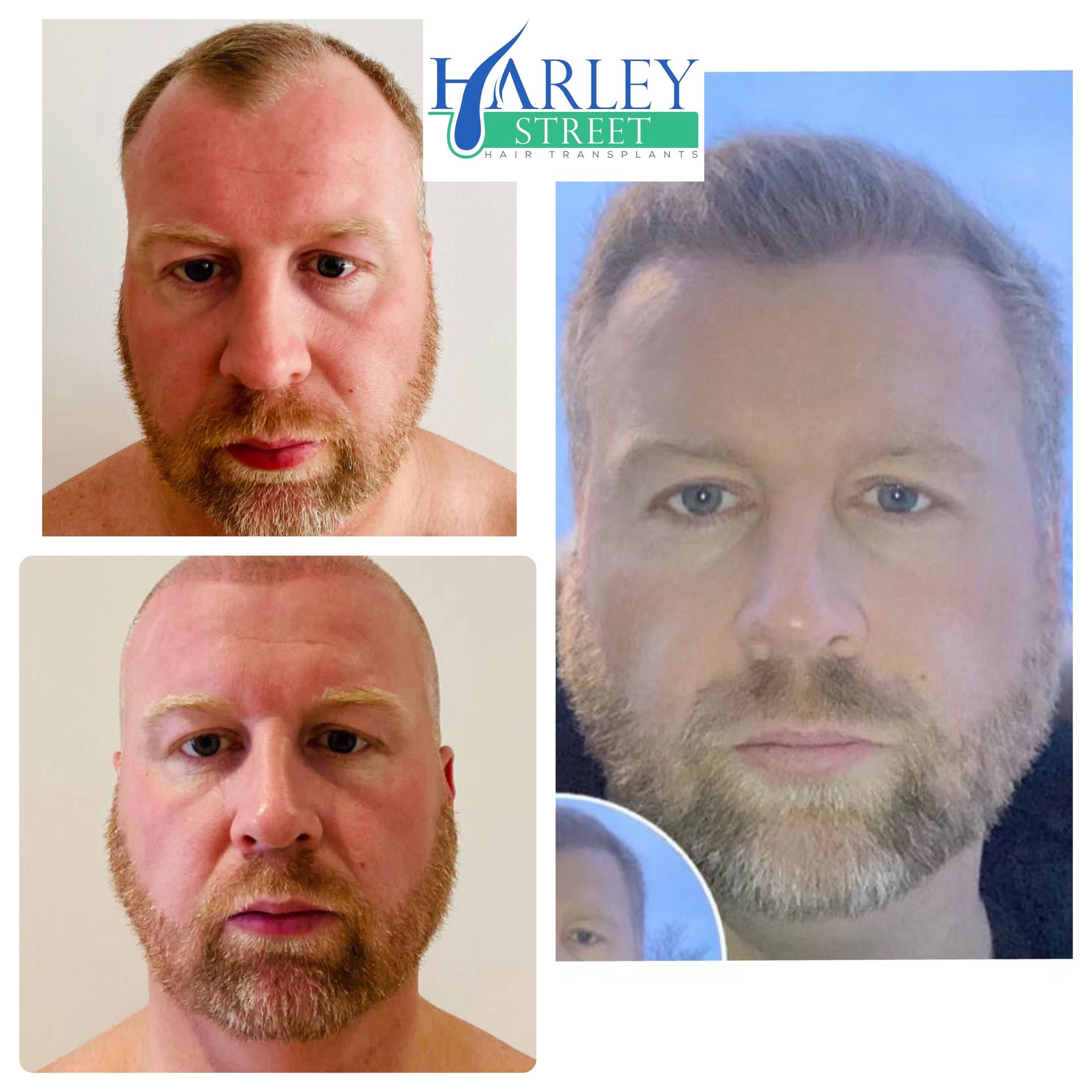
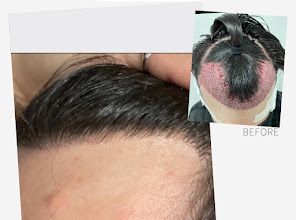
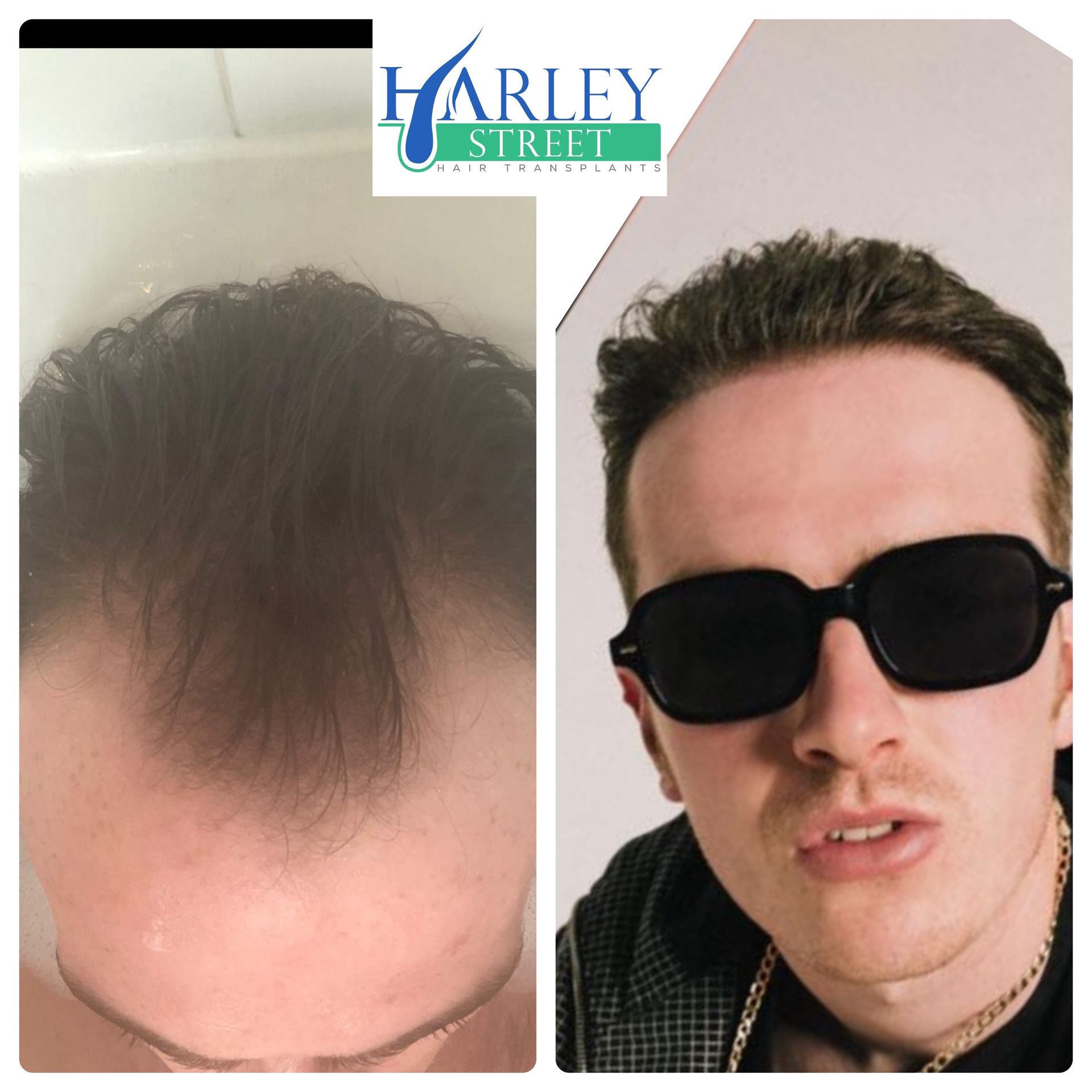
Existing Liverpool Hairline Results
All three patient images from the current hairline page are retained. Results vary with the starting hairline, donor supply, graft survival, hair characteristics, healing and future loss.
Related Liverpool Hair Transplant Pages
Hairline Transplant Questions
How is the right hairline height chosen?
The surgeon considers facial proportions, age, existing recession, likely future loss and the donor supply. A lower line uses more grafts and can be harder to support if thinning progresses.
Will the result look natural?
A natural appearance depends on design, single-hair graft selection, irregularity, angle, direction, density transition, graft survival and future hair loss. It cannot be promised before surgery.
How long can a transplanted hairline last?
Donor follicles are selected from areas expected to be more resistant to pattern loss, but no clinic can promise a lifelong appearance. Growth, ageing, scarring and loss of untreated hair can change the result.
Does a hairline transplant leave scars?
Yes. FUE leaves small circular donor scars; FUT leaves a linear donor scar. Recipient placement also creates small wounds. Visibility depends on the technique, skin response, hair length and healing.
Can a naturally high hairline be lowered?
Some patients with a stable high hairline and suitable donor supply may be considered. The design still has to account for facial proportions, density, future loss and the grafts available.
The NHS hair-loss guidance recommends finding the cause before approaching a commercial clinic. Check the surgeon on the GMC medical register.
