Home › Hair Transplants › Transgender Hair Transplant
Transgender Hair Transplant Liverpool
Hair transplantation can help selected transgender and non-binary people change a scalp hairline, restore areas affected by pattern loss or add facial hair. The design begins with the person’s own goals; identity does not dictate one standard hairline or beard.
Consultations are led by Dr Harpreet Kalra, GMC 7126076, at our Liverpool city-centre clinic.
Contents [show]

Hair Restoration Built Around Your Goals
There is no single transgender hair transplant. One person may want to soften frontotemporal recession, another may prefer a straighter or more angular hairline, and someone else may be concerned mainly about crown thinning, sideburns, a beard gap or a scar from previous surgery.
Some transgender women ask about lowering or rounding the visible hairline and filling the temples. Some transgender men and non-binary people ask about scalp pattern loss after testosterone or about facial-hair development. These are examples, not rules. The design should reflect the individual’s face, hairstyle, existing hair and preferences.
A transplant redistributes a limited supply of follicles. It cannot create unlimited density or prevent native hair from changing later, so the immediate goal has to be balanced with donor reserve and the likely long-term pattern.
Gender-Affirming Hormones and Hair
Feminising hormone therapy
Research suggests that estradiol and anti-androgen treatment may improve androgen-related scalp thinning in some transgender women, but response varies and established temple or hairline recession may remain. A case report of substantial regrowth does not mean the same response can be expected for everyone.
Feminising treatment may also reduce the rate or calibre of some facial and body hair without removing every follicle. That distinction matters when facial-hair removal and scalp transplantation are being planned together.
Masculinising hormone therapy
Testosterone can increase facial and body hair and may induce or accelerate androgenetic alopecia in genetically susceptible transgender men and non-binary people. Timing and severity differ, and not everyone develops the same pattern.
Do not stop, start or change prescribed hormones because of a transplant webpage. Hair-loss treatment and surgical timing should be coordinated with the clinician who manages hormone therapy, particularly when a medicine could affect wider gender-affirming goals.
Hairline, Scalp and Facial-Hair Design
Scalp hairline planning
A rounded hairline with closed temple angles can frame the forehead differently from a straighter outline with deeper temporal corners. Neither is intrinsically right for a particular identity. The surgeon draws the proposed shape with the patient upright and reviews its height, curve, temple points and relationship to facial proportions.
Fine single-hair grafts are usually selected for the visible edge, with suitable larger follicular units placed behind them. Lowering a hairline substantially uses more grafts and can restrict options if pattern loss progresses.
Crown and mid-scalp
Thinning behind the hairline may need separate priority. Crown work follows the natural whorl and can consume a large donor supply, so frontal, mid-scalp and crown goals should be considered together.
Beard and sideburn planning
A beard transplant may add hair to the moustache, goatee, cheeks, jaw or sideburns when the skin and donor hair are suitable. Hair direction changes sharply across these areas, and scalp donor hair may require ongoing trimming.
For people taking testosterone, facial hair can continue developing for years. Waiting for the pattern to become clearer may sometimes change the proposed graft plan. This is assessed individually rather than by a fixed timetable.
Previous facial surgery or scars
Hairline scars from previous procedures may sometimes be grafted after they have matured. Growth in scar tissue is less predictable because thickness and blood supply can vary, and a transplant cannot ensure that a scar will be concealed.
Who May Be Suitable?
Assessment points
- A clear diagnosis for any scalp or facial-hair loss.
- A donor area with sufficient density and suitable hair characteristics.
- A stable or plan-able pattern that fits the available donor reserve.
- Realistic expectations about density, scarring and future change.
- Medical, scalp and skin health suitable for elective surgery.
Reasons to pause or investigate
Rapid shedding, active scalp inflammation, alopecia areata, suspected scarring alopecia or diffuse donor thinning may make surgery inappropriate. A dermatology opinion or further investigation can be needed first.
There is no blanket requirement to have used hormones or undergone another gender-affirming procedure before consultation. If hormones or other surgery are relevant to the hair plan, the timing should be discussed with the appropriate treating clinicians.
FUE, FUT and DHI: What the Terms Mean
FUE harvesting
FUE removes follicular units individually with small punches. It leaves many small circular donor scars. Their visibility depends on punch size, extraction pattern, skin response, hair length and healing.
FUT harvesting
FUT removes a donor strip that is closed to leave a linear scar. It may be considered when scalp laxity, hairstyle, donor needs and scar preference support it.
DHI placement
DHI usually describes placing grafts with an implanter pen; donor grafts still need to be harvested. The term does not by itself mean a shorter healing period, less visible scarring or more reliable growth.
Choosing a method
The method should follow diagnosis, donor measurements, hairstyle, graft needs and the area being treated. Marketing labels do not replace a surgeon-led assessment.
What Happens During Planning and Surgery?
1. Private consultation
The discussion covers the patient’s goals, preferred language, hair history, health, medicines, hormone treatment where relevant, previous procedures and concerns about scars or shaving.
2. Examination and design
The surgeon assesses scalp or facial skin, donor density, miniaturisation, hair calibre and curl. The design is drawn and adjusted with the patient before a graft estimate is finalised.
3. Local anaesthetic and harvesting
Local anaesthetic is administered to the treatment areas. Grafts are removed using the agreed method, which creates donor wounds and scars.
4. Recipient sites
Sites are created to control the proposed outline, angle, direction and distribution. Hairline, crown and facial zones each require different directional planning.
5. Placement
Prepared grafts are placed into the recipient sites. Growth depends on graft survival, tissue, technique, healing and later hair change.
6. Discharge and follow-up
Written aftercare covers washing, sleeping, activity and medicines specifically prescribed. Patients need a direct route to the clinic if symptoms worsen.
Recovery, Growth and Risks
Early healing
Redness, swelling, tenderness, crusting and altered sensation can occur in donor and recipient areas. Their extent and duration vary. Plans for work, travel, styling or concealment should leave room for individual healing.
Some transplanted shafts may shed during the following weeks, but this is not identical for everyone. New growth develops gradually over later months and may be uneven at first.
Risks to discuss
Possible complications include bleeding, infection, visible scarring, poor graft growth, folliculitis or cysts, altered sensation, temporary or lasting loss of vulnerable native hair, donor thinning and an unnatural outline, angle or density.
Scar tissue from previous surgery can make growth less predictable. No harvesting or placement technique can promise invisible scars or a particular cosmetic outcome.
Read the aftercare guide, growth timeline and donor-area guide.
Transgender Hair Transplant Cost in Liverpool
The current Liverpool page gives a general UK guide of £3,000–£8,000 and describes FUE at around £4,000. These are published guides, not an individual quotation or a promise that every treatment falls within them.
The fee depends on whether the plan covers a hairline, temples, mid-scalp, crown, facial hair or scar; the proposed graft range; harvesting method; donor complexity; previous surgery; operating time and follow-up. A written quote should state exactly what is included.
Read the detailed Liverpool hair transplant cost guide.
Existing Liverpool Patient Videos
Both videos from the current transgender hair transplant page are retained. Individual accounts do not predict another patient’s healing, growth, density or satisfaction.
Existing Liverpool Hair Transplant Images
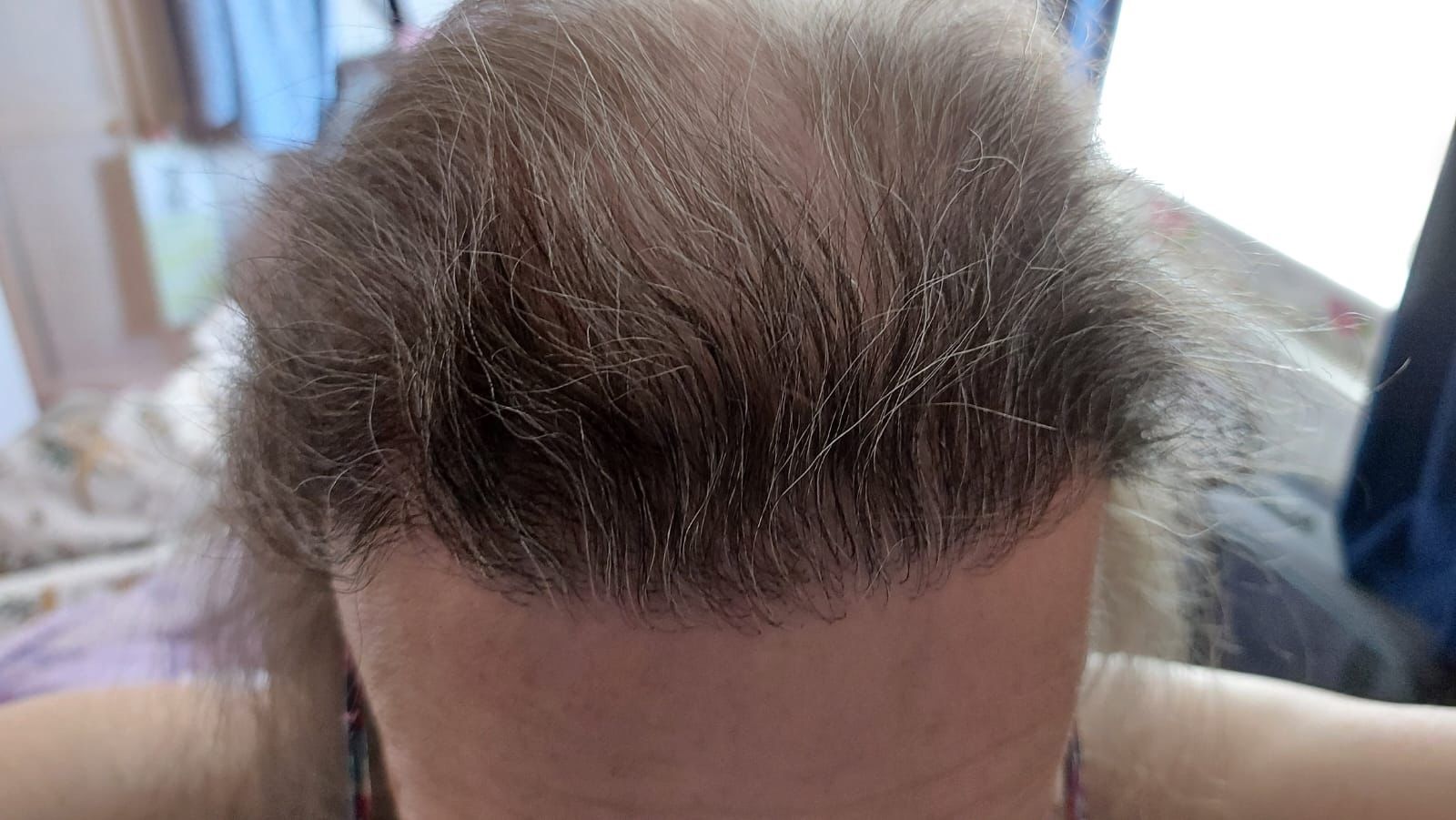
Both result images from the current page are retained below. They are individual examples, not forecasts. Appearance varies with the starting pattern, donor supply, design, graft growth, skin, healing and later native-hair change.

Explore Hair Restoration in Liverpool

FUE
Individual graft harvesting with donor-density planning.

FUT
Strip harvesting with a linear donor closure.

PRP
A separate non-surgical option with evidence and limitations.

Eyebrows
Fine placement planned around angle and direction.

Beard
Facial-hair design using suitable donor grafts.

Women
Diagnosis-led planning for suitable patterns of loss.
Transgender Hair Transplant Questions
Do I need to be taking hormones before a hair transplant?
There is no blanket rule. Diagnosis, hair-loss stability, donor supply, health and the proposed design determine suitability. If hormone treatment affects the plan, timing should be coordinated with the clinician who prescribes it.
Can hormones restore a recessed hairline?
Feminising treatment may improve androgen-related thinning in some people, but the response varies and established temple or hairline recession may remain. A clinical assessment is needed before surgical planning.
Can testosterone cause scalp hair loss?
Testosterone can induce or accelerate androgenetic alopecia in genetically susceptible transgender men and non-binary people. Not everyone develops the same pattern or rate of change.
Can transplantation be combined with facial surgery?
Timing depends on the procedure, incision location, swelling, scar maturity and the teams involved. Hair transplantation may be planned before or after another operation, but this requires coordination rather than a universal sequence.
Is DHI better for transgender patients?
No method is automatically better because someone is transgender. DHI describes an implantation approach; diagnosis, donor planning, design, surgeon experience and aftercare remain more important than the label.
Read the peer-reviewed reviews of androgenetic alopecia in transgender and gender-diverse patients, gender-affirming hormone therapy and hair growth, and the cohort study of androgenetic alopecia after masculinising hormone therapy. Check the surgeon on the GMC medical register.
