
Home › Treatments › Temple Hair Transplant
Temple Hair Transplant in Liverpool
Temple work is a small area with little room for error. The design must fit the wider hairline, and grafts need shallow angles, fine calibre and direction that follows the patient’s native hair.
Contents [show]
What Is a Temple Hair Transplant?
A temple transplant places selected follicles into recession at the front corners of the hairline or into the lower temporal points at the sides of the forehead. Those are related but visually different zones. The frontal corners join the main hairline; temporal points frame the face lower down.
Some patients want to soften triangular recession, restore a lost corner or repair an unnatural outline from previous surgery. A small change can alter facial proportions, which is why the design should be drawn and viewed from the front, side and three-quarter angles before treatment.
The separate hairline transplant page covers full frontal restoration. This page focuses on the tighter direction, calibre and symmetry demands of the temples.
Is Temple Recession Always Pattern Hair Loss?
No. A naturally mature hairline, androgenetic hair loss, traction, inflammatory disease, scarring and previous surgery can affect the temples. The history, scalp and donor region need examination before a cosmetic plan is made.
Rapid or patchy change, redness, scale, pain, broken hairs or smooth scarred skin may need GP or dermatology assessment. Transplanting into active inflammatory or scarring disease can produce a poor result and may aggravate the condition.
Women with temporal thinning need assessment for traction practices, patterned loss, hormonal or nutritional factors and inflammatory causes. The plan should not assume the same outline used for a male hairline.
Temple Design, Angle and Direction
Frontal temple corners
The corners must blend into the central hairline without becoming a straight geometric edge. Fine single-hair grafts are usually important at the leading margin, with a gradual change in density behind it.
Temporal points
Native temporal-point hair lies flat and sweeps backwards or downwards. Recipient sites must be very shallow. A graft placed too upright can look coarse or stick away from the face.
Calibre match
Hair from the back of the scalp may be thicker than native temple hair. Donor selection matters because a dense row of coarse shafts can look transplanted even when growth is good.
Long-term shape
A low, sharp point may not age well if the hairline above it continues receding. The design needs to work with likely future loss and the finite donor reserve.
FUE, FUT and DHI for Temple Work
FUE and FUT describe how grafts are obtained. FUE leaves small circular donor scars; FUT leaves a linear scar. The choice depends on donor density, hairstyle, scalp laxity, previous surgery and the wider graft plan.
DHI usually describes placement with an implanter pen. It does not remove the need to plan recipient-site angle or donor harvesting. A pen name cannot make a poor temple design look natural.
The surgeon selects suitable single-hair and fine grafts, stores and handles them during the procedure, then places them in the planned direction. The exact graft range follows measurements rather than a standard number for “two temples.”
Who May Be Suitable?
Possible candidates have a suitable diagnosis, stable enough pattern, healthy scalp, adequate donor region and goals that can be met without an aggressive design. Younger patients with active recession may be advised to wait or choose a more conservative outline.
Previous temple work needs close assessment of angle, density, scarring and remaining donor hair. Repair might involve adding finer grafts, removing selected misplaced grafts or changing styling. One procedure cannot always correct every feature.
Read the donor area guide before treating a small recipient zone as if donor supply does not matter.
Healing and Hair Growth
Small crusts, redness, swelling, tightness or altered sensation can occur. The location near the forehead can make swelling visible around the brow or eyelids. Follow the clinic’s written instructions for washing, sleeping, work, exercise and headwear.
Some transplanted shafts often shed during the following weeks, while the amount and timing vary. New growth is gradual and may look fine or uneven at first. Read the recovery timeline without treating it as a personal deadline.
Risks and Limitations
Possible problems include bleeding, infection, swelling, altered sensation, folliculitis or cysts, donor thinning, visible scars, poor graft growth, asymmetry, an overly sharp outline and grafts that sit at an unnatural angle.
No operation can promise perfect symmetry. Faces and native hairlines are not identical on both sides, and healing or graft growth can differ. The goal is a believable relationship between the temple, hairline and face.
Temple Hair Assessment in Liverpool
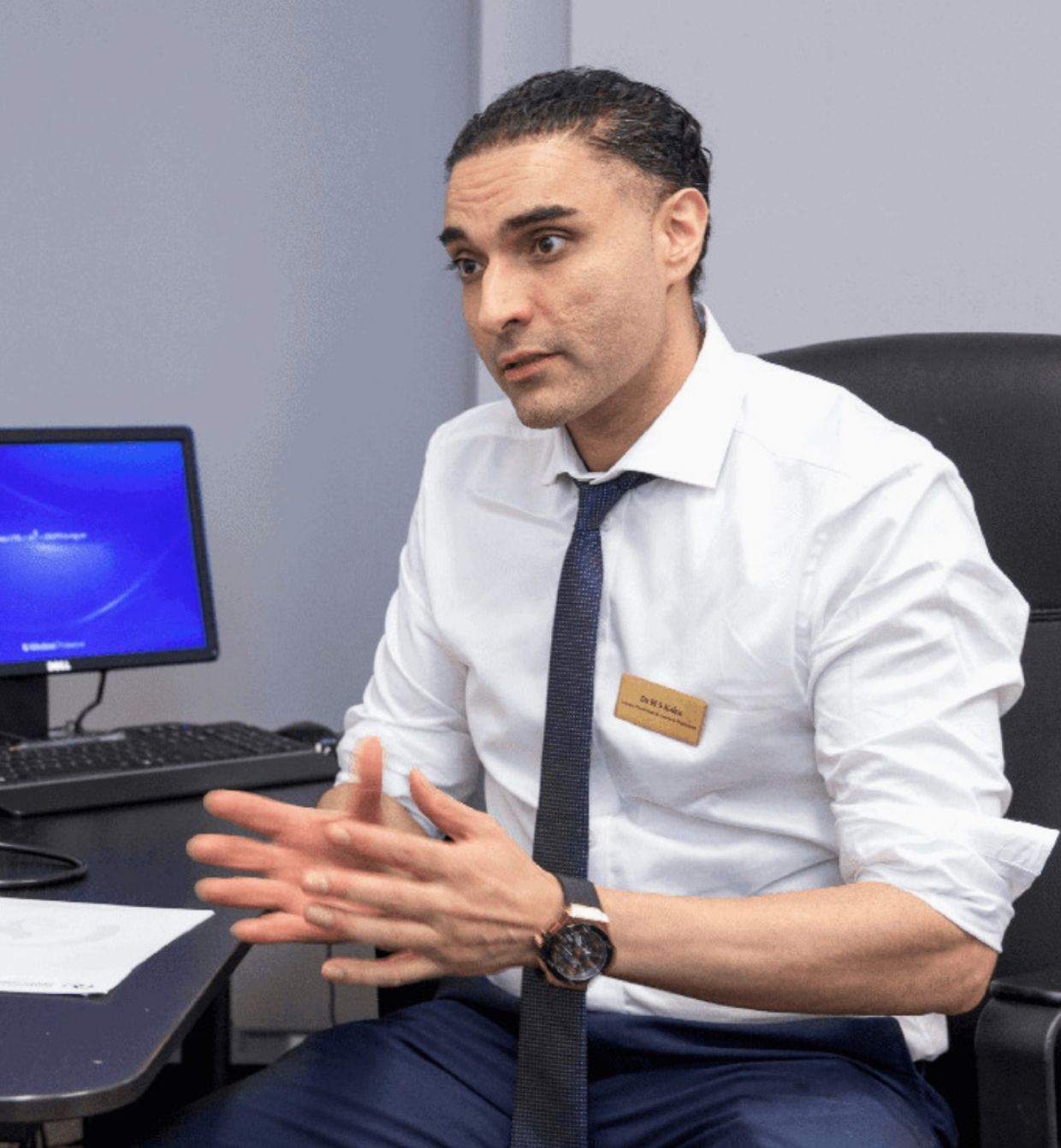
Dr Harpreet Kalra, GMC 7126076, assesses the temples, wider loss pattern and donor supply before discussing a design.
Clinic address
2–12 Lord Street, Liverpool L2 1TS
Open in Google Maps
