
Home › Hair Transplants › Crown Hair Transplant
Crown Hair Transplant Liverpool
A crown transplant places donor grafts into the vertex at the top and back of the scalp. The design has to follow the natural whorl while using a finite donor supply carefully, particularly when the frontal hairline or mid-scalp may also need treatment.
Consultations are led by Dr Harpreet Kalra, GMC 7126076, at our Liverpool city-centre clinic.
Contents [show]

What a Crown Hair Transplant Involves
The crown, also called the vertex, is the circular area towards the back of the top scalp. A transplant moves follicular-unit grafts from a suitable donor area into planned recipient sites in the crown. The surgeon chooses the harvesting method after examining the donor supply, hairstyle, scar preference and size of the operation.
FUE removes grafts individually and leaves many small circular donor scars. FUT removes a strip that is dissected into grafts and leaves a linear donor scar. DHI usually describes placement with an implanter pen rather than a separate way of harvesting grafts.
Crown work is not simply an empty circle to fill. Existing hairs turn around one or more whorl centres, change direction across the area and often become progressively thinner beyond the obvious patch. A plan that ignores this can look unnatural as surrounding hair loss advances.
Why Hair Thins at the Crown
Pattern hair loss
Androgenetic alopecia is a common cause of gradual crown thinning. In men it may develop alongside temple or hairline recession. In women, thinning can appear more diffusely across the top of the scalp. The diagnosis matters because diffuse loss can leave fewer reliable donor hairs than a sharply defined bald area suggests.
Temporary or medical causes
Sudden shedding, patchy loss, scalp inflammation and hair loss linked to illness, medication or treatment should not be assumed to be pattern baldness. The NHS advises establishing the cause before approaching a commercial hair clinic.
Scarring conditions
Scarring alopecia can damage follicles and alter the blood supply of the recipient skin. Active disease may make surgery unsuitable, and growth in established scar tissue is less predictable. Symptoms such as burning, tenderness, itching or visible scalp change need proper assessment.
Continuing loss around a transplant
A transplant does not stop untreated native hair from thinning. Crown planning therefore considers the current patch, miniaturised hair around it and the donor reserve that may be needed later.
Whorl Design and Donor-Hair Priorities
The centre and direction of the existing whorl guide recipient-site placement. Hairs generally rotate and fan out rather than growing in parallel rows. The design must also blend with any surviving crown hair so that the transition is not obvious from above or behind.
The crown can consume a large number of grafts because of its surface area and the way light reaches it from above. A high graft count is not automatically the right plan. If the frontal third is also thin, using too much donor hair in the crown may leave insufficient reserve for the hairline and mid-scalp, which usually frame the face more strongly.
Graft numbers are therefore decided after measuring the area, assessing hair calibre and donor density, and agreeing which zones matter most to the patient. The plan may stage treatment or accept lighter crown coverage to protect the donor area.
Who May Be Suitable for Crown Restoration?
Factors that may support surgery
- A clear diagnosis and a crown pattern that can be planned sensibly.
- A donor area with enough density for the proposed coverage.
- Realistic expectations about visible density under overhead light.
- A willingness to preserve grafts for possible future loss.
- Scalp health and medical history that do not create an avoidable surgical risk.
When further assessment is needed
Rapidly changing loss, diffuse thinning, active scalp symptoms, suspected scarring alopecia or a weak donor area can change whether surgery is sensible. A very small early crown patch in a younger patient may also be difficult to plan because the final pattern is not yet clear.
Suitability for the crown cannot be judged from the recipient photograph alone. The donor area and the rest of the scalp carry equal weight.
How Crown Transplant Surgery Is Planned
1. Examination and photography
The surgeon examines the crown from several angles, looks for miniaturisation and maps the donor area. Previous treatment, scalp symptoms, medication and the wider pattern of loss are reviewed.
2. Whorl marking
The natural whorl centre, direction changes and outer transition are marked. If little native hair remains, the new pattern must still relate naturally to the patient’s scalp and surrounding hair.
3. Donor harvesting
Grafts are obtained using the agreed technique. Extraction spacing, strip position and scar planning depend on whether FUE or FUT is used.
4. Recipient-site creation
Sites are created to follow the marked rotation and distribution. Angles change around the whorl rather than staying uniform across the whole crown.
5. Graft placement
Prepared grafts are placed according to the design and available supply. The appearance depends on graft survival, hair characteristics, placement and later loss of native hair.
6. Written aftercare
Patients receive instructions for washing, sleeping, activity and any prescribed medicines. They should also know how to contact the clinic if pain, redness, swelling or discharge is worsening.
Crown Recovery, Growth and Risks
Early healing
Redness, swelling, tenderness and crusting can occur in the donor and recipient areas. The amount and duration vary. Follow the instructions for the operation performed rather than another patient’s timetable.
Some transplanted shafts may shed in the following weeks, but this is not identical for everyone. New growth develops gradually over the following months. Crown maturation can be slower than the frontal hairline in some patients, so an early photograph is not a final assessment.
Risks to discuss
Possible complications include bleeding, infection, swelling, visible scarring, altered sensation, folliculitis or cysts, poor graft growth, an unnatural whorl, donor depletion and continuing thinning around the transplant.
Scar appearance varies with the harvesting method, skin response, previous scar tissue and individual healing. No method can promise invisible scarring or a particular density.
Read the full aftercare guide, growth timeline and donor-area guide.
Crown Hair Transplant Cost in Liverpool
The clinic advertises hair transplants from £3,499. A crown quote depends on the measured area, graft range, donor density, harvesting method, previous surgery and whether treatment is limited to the vertex or forms part of a wider plan.
The live page’s broad £2,500–£8,000 UK estimate is not a substitute for an individual quotation. Before paying, ask for the proposed graft range, which areas are included, who performs each surgical stage, what follow-up is provided and how the donor area will be protected.
Read the detailed Liverpool hair transplant cost guide.
Existing Liverpool Crown Results
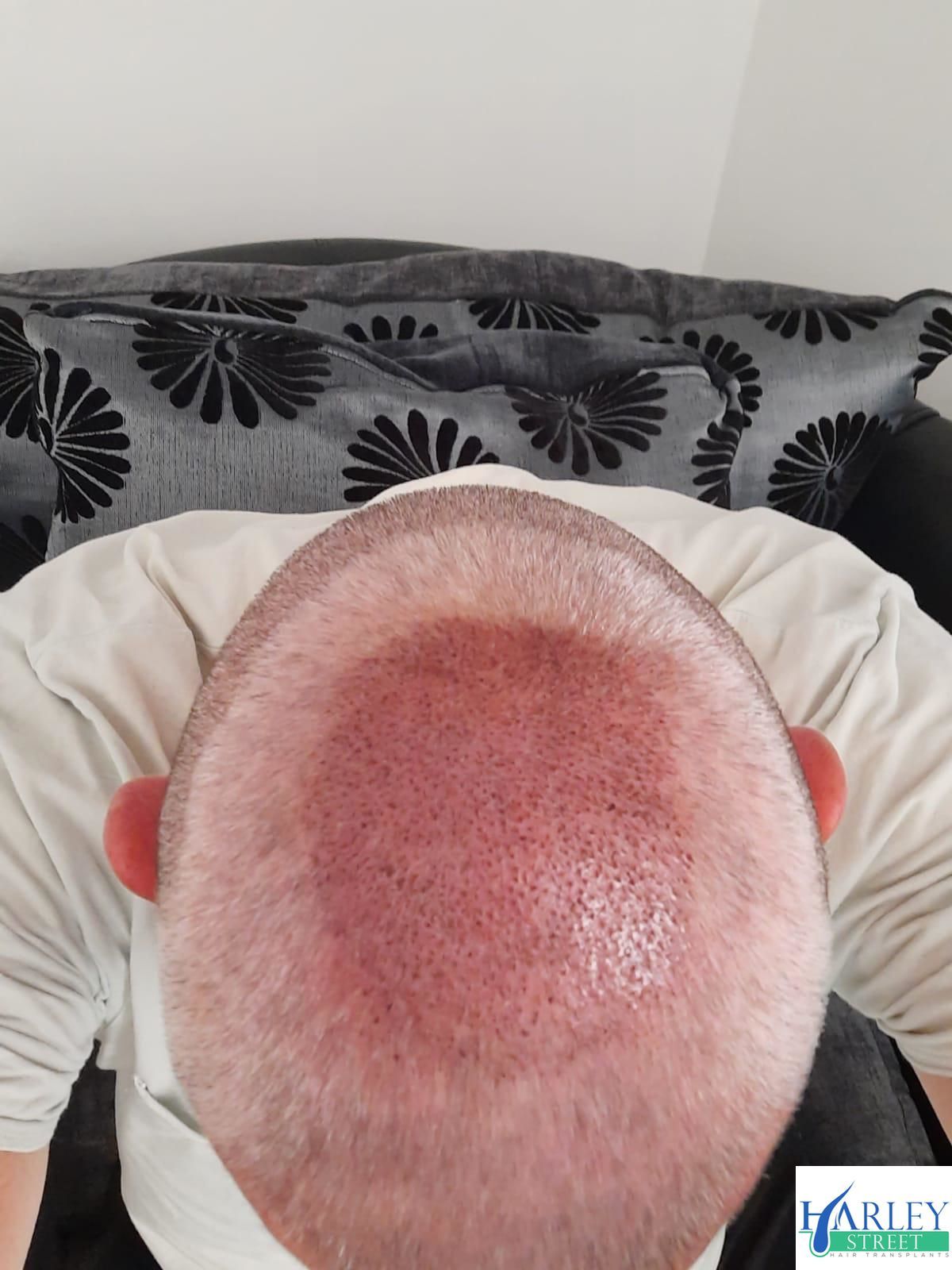
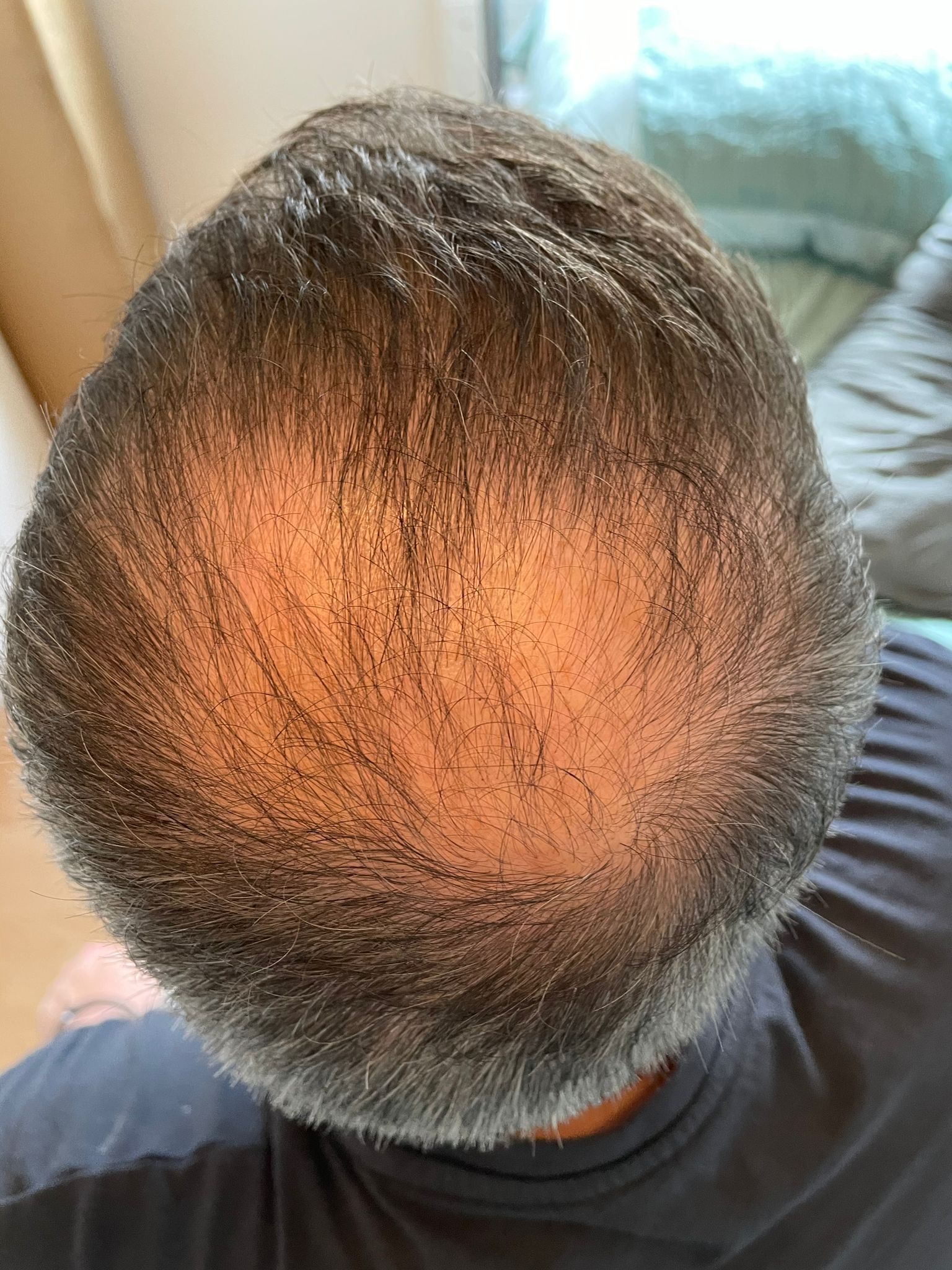
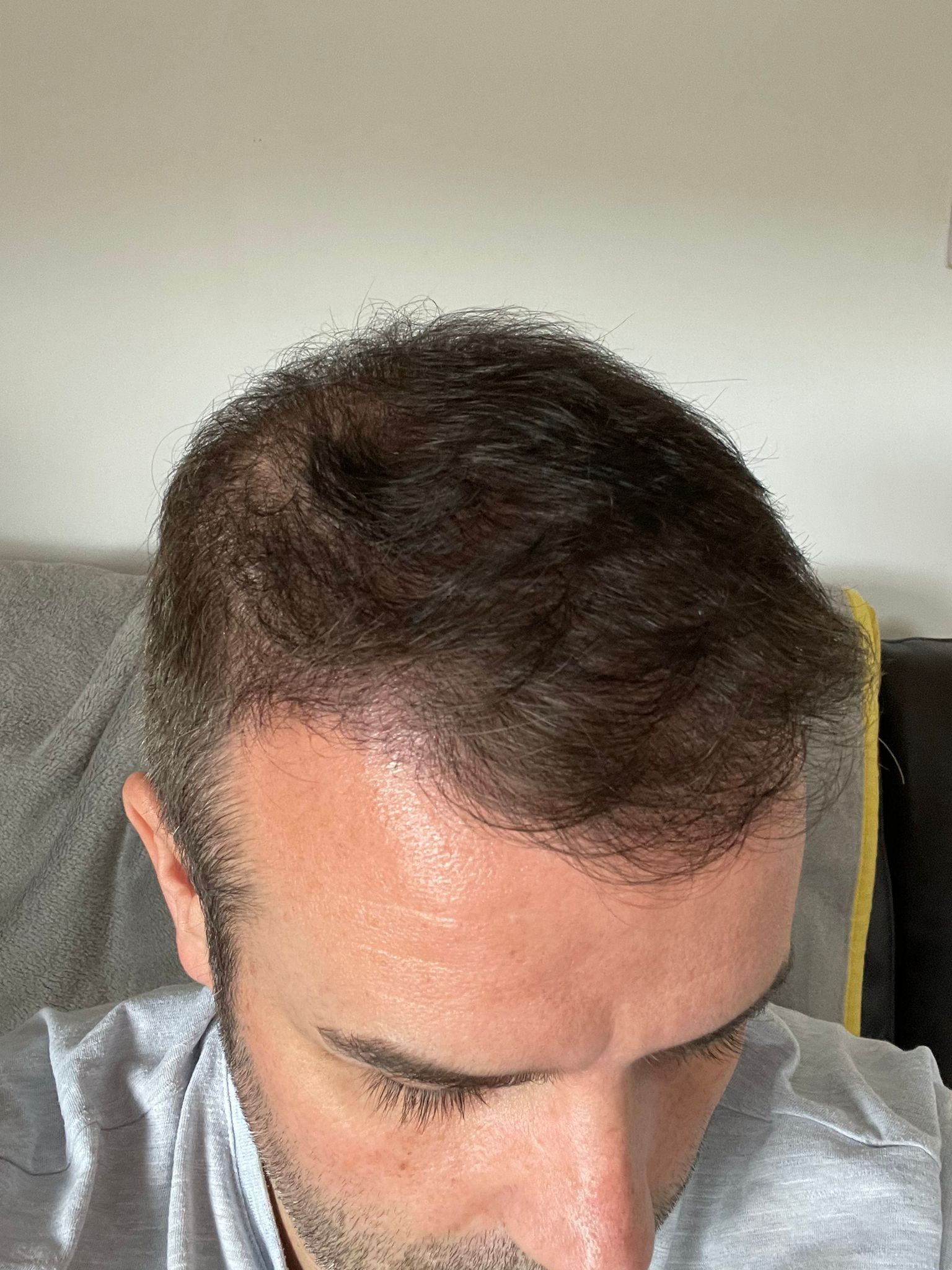
All four before-and-after images from the current crown page are retained. Patient results vary with the starting pattern, donor supply, graft survival, hair calibre, healing and continuing hair loss.

Related Hair-Restoration Options

FUE
Individual graft harvesting with donor-density planning.

FUT
Strip harvesting with a linear donor closure.

PRP
A separate non-surgical option requiring realistic expectations.

Eyebrows
Fine placement planned around angle and direction.

Beard
Facial-hair design using suitable donor grafts.

Women
Diagnosis-led planning for suitable patterns of loss.
Crown Hair Transplant Questions
How many grafts does a crown transplant need?
The number depends on the measured surface area, existing density, hair calibre, whorl pattern, donor supply and the coverage that can be supported safely. A crown photograph alone is not enough to set a responsible graft figure.
Why can the crown use so many grafts?
The crown is a broad surface viewed under overhead light, and the hairs rotate through a whorl rather than lying in one direction. Those features can make visible coverage graft-intensive.
Will a crown transplant look permanent?
No clinic can guarantee a permanent appearance. Transplanted follicles are selected from a donor area expected to be more resistant to pattern loss, but graft growth, scarring, ageing and further thinning of untreated hair can change the result.
Does a crown transplant leave scars?
Yes. FUE leaves multiple small circular donor scars; FUT leaves a linear donor scar. Recipient placement also creates small wounds. Visibility varies with technique, hair length, skin response and healing.
Can women have a crown hair transplant?
Some women may be suitable, but crown thinning in women is often diffuse and can have several causes. Diagnosis and donor assessment come before deciding whether surgery is appropriate.
The NHS hair-loss guidance recommends finding the cause before approaching a commercial clinic. You can also check the surgeon on the GMC medical register.
