Home › Hair Loss Treatments
Hair Loss Treatments in Liverpool
The right treatment depends on why hair is being lost, whether the pattern is stable and what the donor area can safely support. At Liverpool Hair Transplant Clinics, the starting point is an assessment rather than a technique.
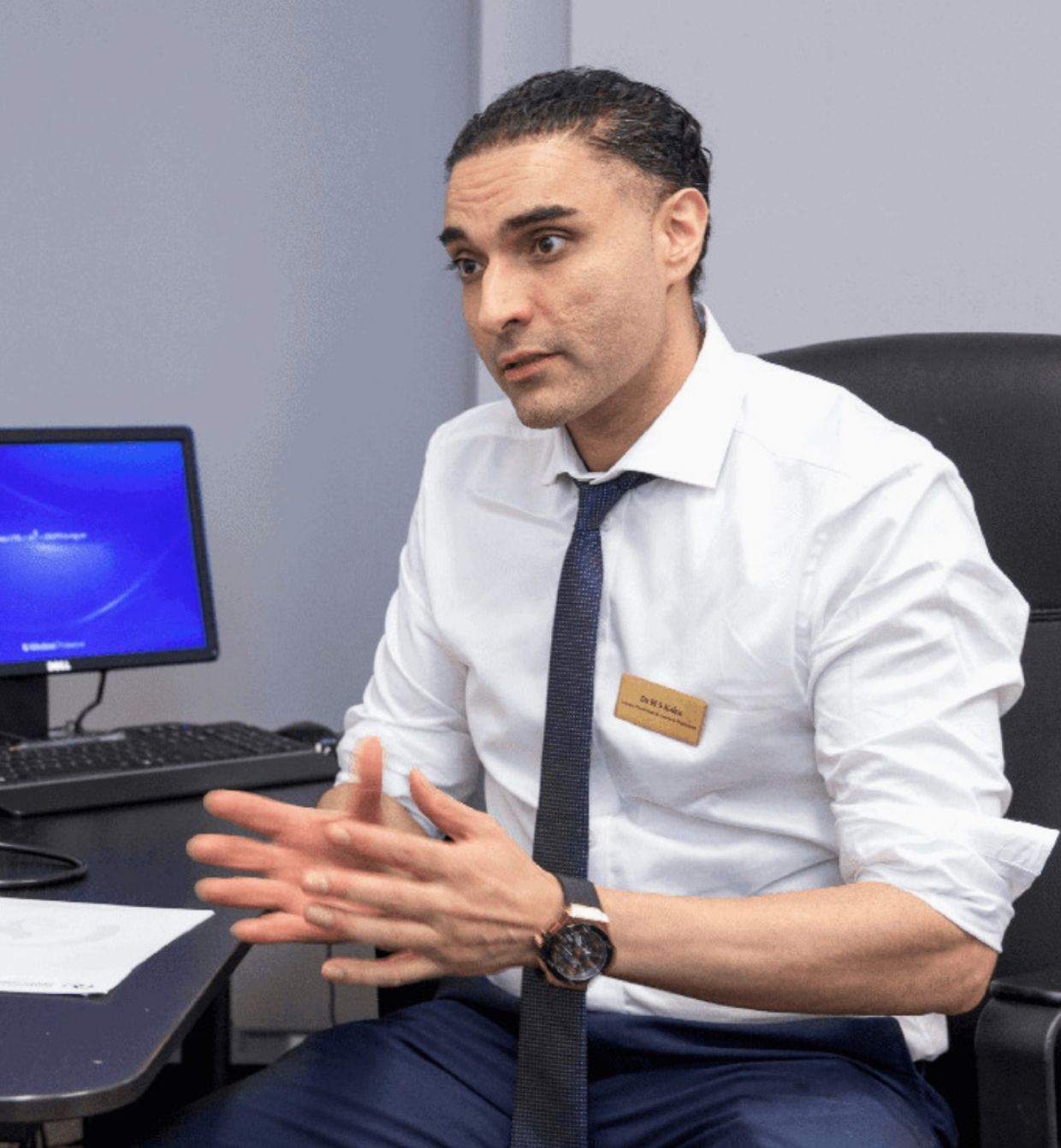
Consultations are led by Dr Harpreet Kalra, GMC 7126076.
Contents [show]
Hair Loss Treatment Starts with the Cause
Hair transplantation can be useful for some stable patterns of permanent hair loss, but it is not the first answer to every change in density. Male and women’s pattern hair loss, diffuse thinning, traction, alopecia areata, scarring alopecia, illness, nutritional problems, medicines and inflammatory scalp conditions can look similar without having the same treatment.
A consultation should establish when the change began, where it is progressing, whether the scalp has symptoms and whether donor hair at the back and sides is suitable. Sudden loss, smooth patches, marked scaling, pain, inflammation or scarring can require medical investigation before cosmetic surgery is discussed.
Moving grafts does not stop untreated native hair from changing later. A sensible plan considers the existing pattern, likely progression, age, family history, styling preferences and the possibility that future treatment may be needed. It should also leave room for the valid decision to monitor the hair or choose no procedure.
FUE, FUT and DHI Hair Transplant Methods
The names used for hair transplant techniques can make them sound like entirely different operations. In practice, every transplant has two broad stages: grafts are obtained from a donor area, then recipient sites are created and the grafts are placed. The differences concern how those steps are carried out and the scars, handling and practical trade-offs involved.

FUE hair transplant
Follicular unit extraction removes small groups of hairs individually using punches. It avoids a strip incision, but still causes scarring: each extraction leaves a small circular scar. Punch size, spacing, donor density, hairstyle and healing affect how visible the donor area becomes.

FUT hair transplant
Follicular unit transplantation removes a narrow strip of donor scalp before it is divided into grafts. It leaves a linear scar and may be considered where scalp laxity, graft requirements and hairstyle make strip harvesting reasonable. Previous surgery and scar tendency matter.
DHI hair transplant
DHI commonly refers to placing grafts with an implanter pen. The grafts still need to be harvested, usually by FUE. The label does not by itself determine scar visibility, recovery, shedding or growth; those depend on the wider surgical plan and the individual patient.

Choosing between methods
The decision should be based on donor characteristics, treatment size, scalp laxity, previous surgery, hairstyle, medical history and the surgeon’s examination. A branded technique is not evidence that it is the right option for a particular scalp.
Hair Transplant Treatment by Area
Hairline transplant
Hairline restoration depends on age-appropriate design, irregularity, density transitions and fine single-hair grafts at the front. Lowering a hairline too far can spend donor hair that may be needed later.
Crown hair transplant
The crown follows a spiral or whorl. It can require many grafts because of its surface area, so the patient and surgeon may need to prioritise between the front, mid-scalp and crown.
Temple restoration
Temple points require particularly shallow direction and a careful match to surrounding hair. Suitability varies with facial proportions, current loss and the future hairline plan.
Eyebrow transplant
Eyebrow grafts are placed at low angles to follow the brow. Scalp donor hair can retain its growth characteristics, so ongoing trimming and grooming may be needed.
Beard transplant
Beard work considers facial-hair direction, curl, calibre and the requested outline. Grafts can also be considered for selected mature scars, though growth in scar tissue can be less predictable.
Scar repair
Grafting into suitable scar tissue can soften the appearance of some scars. Altered blood supply, skin thickness and previous surgery mean density and growth cannot be predicted from photographs alone.
Treatment Planning for Different Hair and Patient Needs
Hair transplants for women
Women can have patterned, diffuse, traction-related, hormonal or inflammatory hair loss. Diffuse miniaturisation may extend into the donor area, so diagnosis and donor mapping are important before surgery is proposed.
Afro hair transplant
Afro-textured hair can provide useful visual coverage, while curl beneath the skin can make extraction more technically demanding. Donor testing, punch choice, scar tendency and natural curl direction all affect planning.
Transgender hair transplant
Treatment can be planned around the patient’s own hairline and facial-hair goals. Hormone history, previous facial or scalp procedures, donor supply and future loss are considered without assuming one standard design.
Previous transplant surgery
Patients seeking repair or another session need assessment of remaining donor density, extraction pattern, linear scars, recipient scarring and the reason the earlier result is concerning. A second procedure is not automatically the best answer.
Non-Surgical Hair Loss Treatment
When surgery is unsuitable, premature or not wanted, the discussion may include monitoring, camouflage, scalp micropigmentation, hair systems or medical treatment appropriate to the diagnosis. Some treatments aim to slow further loss rather than restore areas where follicles are no longer functioning.
Hair-loss medicines
Depending on the patient and diagnosis, a prescriber may discuss medicines such as minoxidil or finasteride. They have different licensing, routes, contraindications and potential side effects. Neither can be expected to stop all shedding or restore all lost hair, and treatment decisions should be made with a qualified clinician.
PRP treatment
Platelet-rich plasma uses a preparation derived from the patient’s own blood. Protocols and evidence vary. It should not be sold as certain to regrow hair, speed transplanted growth or replace investigation of an underlying condition.
The Liverpool hair loss advice hub explains common patterns and signs that should be assessed by a GP or dermatologist.
Who May Be Suitable for a Hair Transplant?
There is no single age, Norwood stage or graft number that determines suitability. A surgeon considers the diagnosis, stability and extent of loss, donor density and miniaturisation, hair calibre, curl, colour contrast, scalp health, medical history, expectations and the size of the proposed area.
The donor area is finite. FUE can make each individual extraction mark small, but taking too many grafts or concentrating them unevenly can leave visible thinning. FUT preserves a different distribution of donor follicles but creates a linear scar. Neither technique can promise invisible scarring.
Someone may be advised to wait, seek medical investigation, stabilise an active condition or revise the treatment area. Read the donor area guide and Norwood scale guide before using online graft calculators, which cannot measure the scalp.
What Happens at a Liverpool Consultation?
Assessment
- History and pattern of hair loss
- Scalp and proposed donor-area examination
- Previous treatments, operations and medicines
- Hair characteristics and usual hairstyle
- Goals, priorities and expectations
Planning and consent
- Whether surgery is appropriate now
- Method, treatment area and estimated graft range
- Who performs each surgical step
- Scars, risks, recovery and alternatives
- Written cost and follow-up arrangements
A quotation is only meaningful after the proposed work has been defined. The clinic’s guide to hair transplant cost in Liverpool explains what a written quotation should cover.
Hair transplantation is surgery and can involve bleeding, infection, swelling, altered sensation, reaction to anaesthetic, cysts or folliculitis, donor thinning, visible scarring, poor graft growth and an unnatural result. The likely risks and limitations must be discussed for the individual plan.
Discuss Hair Loss Treatment in Liverpool
Clinic address
2–12 Lord Street
Liverpool
L2 1TS
Request a consultation
Call 0151 380 0009 or email info@liverpoolhairtransplantclinics.co.uk.
Appointments are arranged in advance. Confirm the consultation or treatment location when booking.
