Home › Hair Transplants › Beard Hair Transplant
Beard Hair Transplant Liverpool
A beard transplant moves suitable donor grafts into planned areas of the moustache, goatee, cheeks or sideburns. Natural-looking facial hair depends on careful control of outline, density, angle and direction rather than simply placing the largest possible number of grafts.
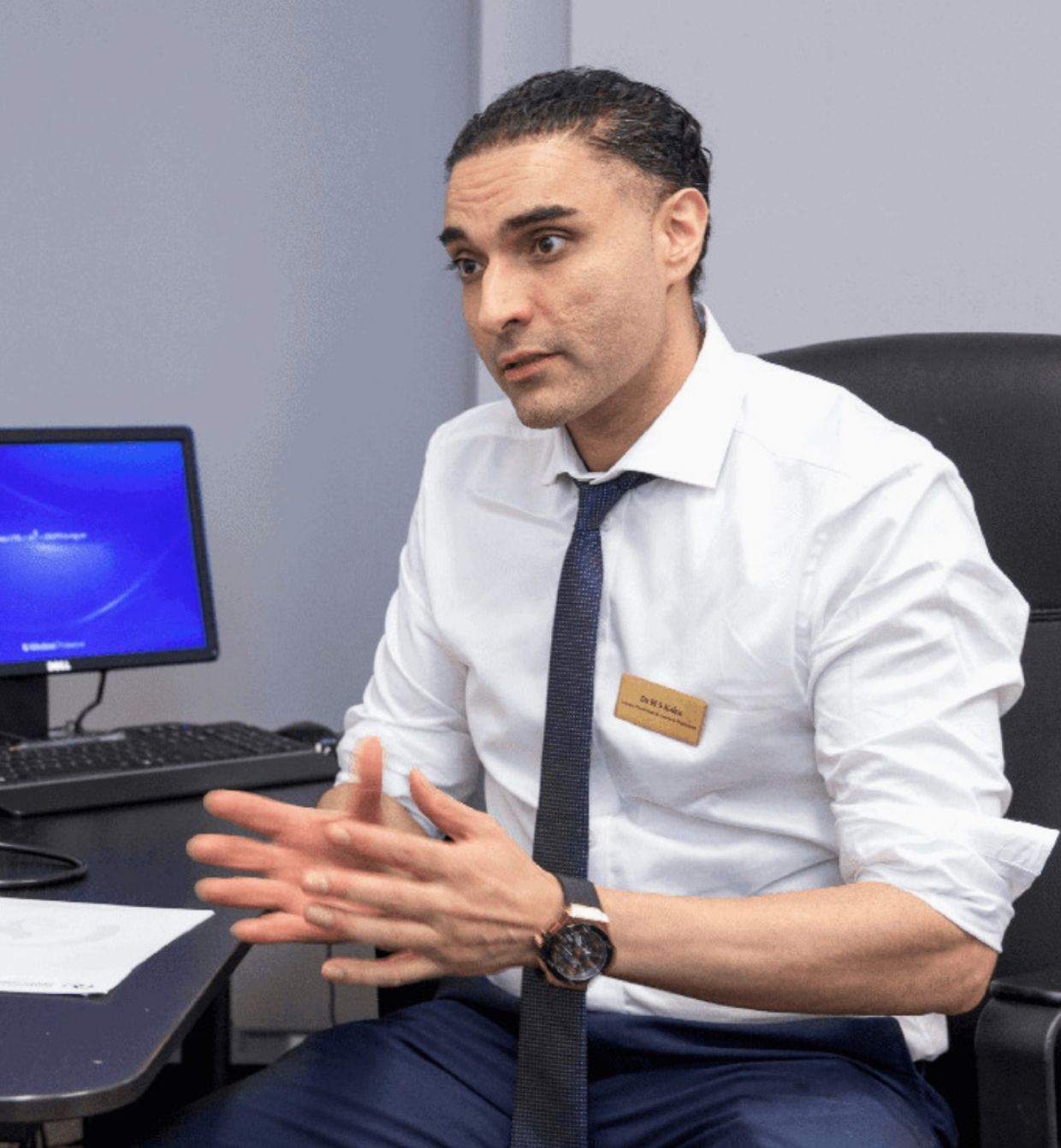
Consultations are led by Dr Harpreet Kalra, GMC 7126076, at our Liverpool city-centre clinic.
Contents [show]
What a Beard Hair Transplant Involves
Follicular-unit grafts are harvested from a suitable donor area, usually at the back or sides of the scalp, and placed into small recipient sites in the face. FUE is commonly considered because it removes units individually, but it still leaves small circular donor scars. The best harvesting plan depends on donor density, hair characteristics, hairstyle, scar preference and the number of grafts required.
Scalp hair does not become biologically identical to native beard hair after transplantation. Its calibre, curl, colour and growth rate influence how well it blends, and regular trimming may be needed. A consultation should compare donor hair with the existing beard rather than assume every scalp donor will suit every facial area.
The procedure creates wounds in both donor and recipient skin. Local anaesthetic is used, although the injections may be uncomfortable and tenderness can follow.
Why Beard Hair May Be Thin or Patchy
Natural growth pattern
Facial-hair distribution varies widely. Some people have longstanding gaps in the cheeks, sideburns, moustache or goatee without an underlying disorder. Transplantation may be considered when the pattern is stable and the donor supply can support the proposed design.
Scars and previous treatment
Injury, burns, surgery or acne scarring can leave local gaps. Growth through scar tissue is less predictable because thickness and blood supply may differ from unaffected skin. A small test area or conservative density may be more appropriate in some scars.
Medical causes
Alopecia areata can affect the beard, while inflammation, infection and other skin conditions can also cause patchy loss. Sudden change, smooth circular patches, scaling, pain or redness should be diagnosed before cosmetic surgery is considered.
Hormones and medicines
Facial-hair development can be influenced by hormones and individual genetics, but a transplant is not a hormone test or a treatment for an endocrine condition. Symptoms suggesting a medical cause should be reviewed by an appropriate clinician.
Beard Shape, Density and Hair Direction
A beard changes direction over short distances. Sideburn hairs generally point downwards, cheek hairs angle towards the jaw, and moustache or chin hairs follow different patterns again. Recipient sites must account for these transitions and keep the hairs close enough to the skin to sit naturally.
The outline is agreed while the patient is upright. Planning considers the cheek line, neckline, moustache connection, goatee, sideburns and any existing asymmetry. A lower cheek line or very dense full beard can require substantially more grafts, so the design must be realistic for the available donor supply.
Single-hair grafts can soften the outer edge, with suitable larger units used behind them where the design calls for more visual density. The surgeon also has to leave donor reserve for possible future scalp loss; facial-hair goals do not remove that long-term consideration.
Who May Be Suitable for Beard Restoration?
Factors that may support surgery
- A stable, clearly understood reason for sparse facial hair.
- Enough suitable donor hair for the agreed zones.
- Healthy facial skin or mature scar tissue that can be assessed.
- Realistic expectations about density, blending and grooming.
- An outline that respects the finite donor reserve.
When further assessment is needed
Active alopecia areata, unexplained patchy loss, inflamed skin, weak donor density or unrealistic coverage goals can make surgery unsuitable. Previous facial surgery, acne scarring or a burn does not automatically rule treatment in or out, but it changes the assessment.
Very fine, straight or differently coloured scalp hair may not blend convincingly with coarse or curly native facial hair. Suitability depends on the match as well as the graft count.
How Beard Transplant Surgery Is Planned
1. Diagnosis and donor assessment
The surgeon reviews the history of facial-hair growth, skin, scars, existing direction and donor density. Photographs help record the starting pattern.
2. Design and graft estimate
The cheek line, moustache, goatee, jaw and sideburn areas are marked according to the patient’s priorities. The estimate must fit the donor supply.
3. Harvesting
Grafts are removed under local anaesthetic using the agreed method. Punch size, spacing and donor distribution influence scar visibility and later donor appearance.
4. Graft preparation
Units are examined and sorted so finer single hairs can be used where the outline needs a softer transition.
5. Recipient sites and placement
Sites are created at changing angles and directions across the face. Grafts are placed to follow the approved design and existing hairs.
6. Discharge and review
Written instructions cover washing, sleeping, activity and any medicines specifically prescribed. Follow-up checks healing before later growth is assessed.
Recovery, Growth and Risks
Early healing
Redness, swelling, tenderness and crusting can develop in the face and donor area. Their extent and duration vary. The clinic’s instructions should be followed carefully because rubbing, scratching or close shaving too early can disturb healing recipient sites.
Some transplanted shafts may shed in the following weeks, but this does not happen identically to everyone. New growth develops gradually over the following months. Early growth may be uneven and should not be treated as the final appearance.
Risks to discuss
Possible complications include bleeding, infection, swelling, visible scarring, altered sensation, folliculitis or cysts, poor graft growth, pitting, colour change and hairs growing at an awkward angle.
Existing scar tissue can reduce predictability, while an unsuitable outline or donor mismatch can remain noticeable even when grafts grow. No surgeon can promise a precise density or invisible scarring.
Read the full aftercare guide, growth timeline and donor-area guide.
Beard Hair Transplant Cost in Liverpool
The current Liverpool page gives a general UK guide of £2,500–£5,000. This is not an individual quote. The fee depends on which facial zones are treated, the proposed graft range, donor complexity, scar tissue, operating time and follow-up arrangements.
A limited moustache gap and a full beard design are different operations. Before paying, ask for the planned zones and graft range in writing, who performs each surgical stage, what aftercare is included and what happens if scar tissue affects growth.
Read the detailed Liverpool hair transplant cost guide.
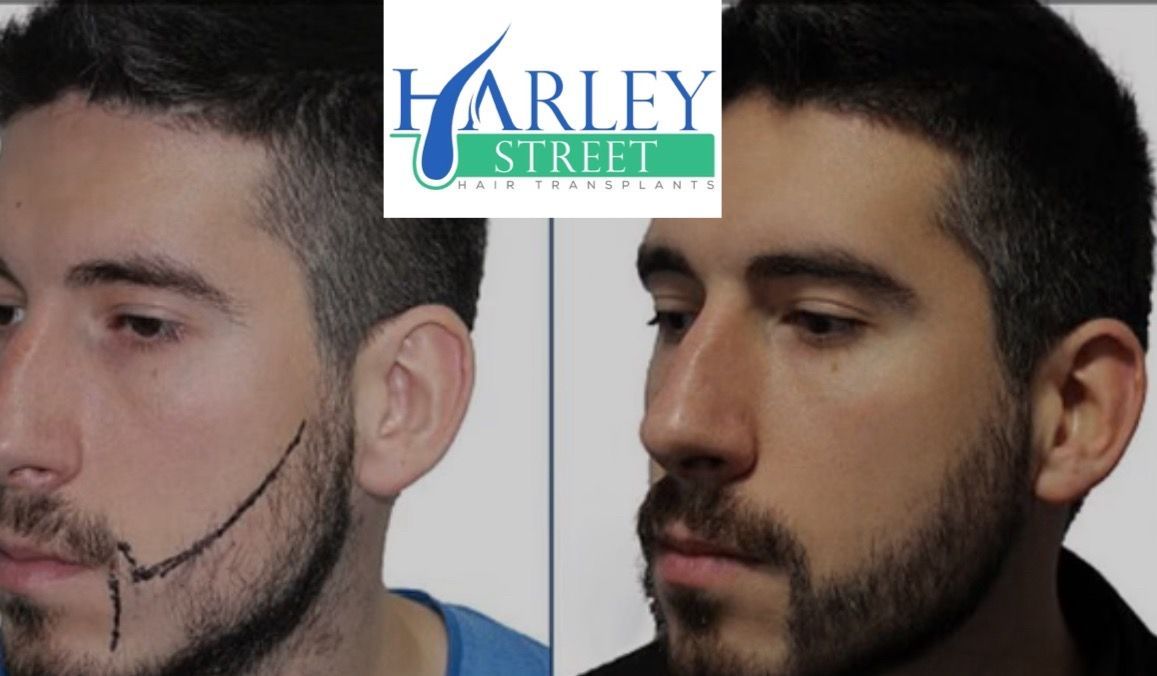
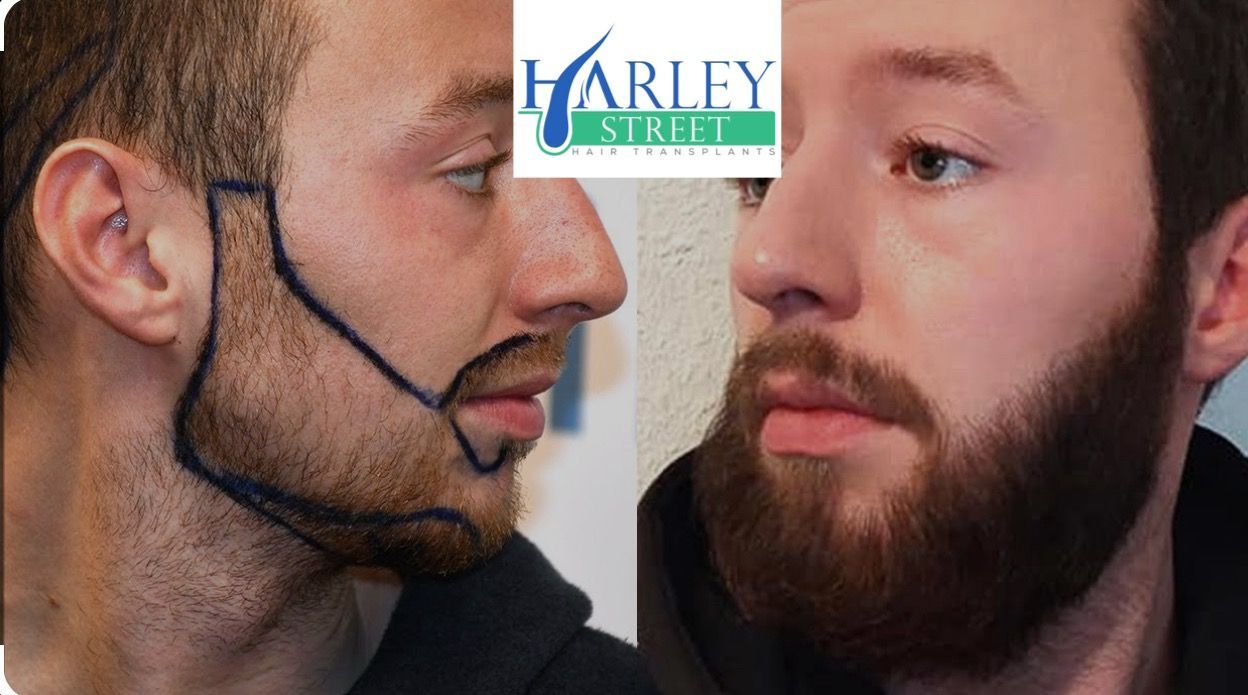
Existing Liverpool Beard Transplant Images
Both images from the current Liverpool beard page are retained below. They should be viewed as individual examples rather than a forecast; appearance varies with the starting pattern, donor hair, design, graft growth, skin and healing.
Explore Hair Restoration in Liverpool

FUE
Individual graft harvesting with donor-density planning.

FUT
Strip harvesting with a linear donor closure.

PRP
A separate non-surgical option with individual evidence and limitations.

Eyebrows
Fine placement planned around angle and direction.

Beard
Facial-hair design using suitable donor grafts.

Women
Diagnosis-led planning for suitable patterns of loss.
Beard Hair Transplant Questions
Where does beard transplant donor hair come from?
It is usually selected from a suitable area of the scalp. The surgeon should compare its calibre, curl, colour and growth behaviour with the existing beard and protect enough donor reserve for future needs.
Does a beard transplant leave scars?
Yes. Graft harvesting leaves donor scars and recipient placement creates small wounds in the face. Visibility varies with the technique, skin response, previous scar tissue, hair length and healing.
Can grafts be placed into a facial scar?
Sometimes, after the scar has matured and been assessed. Blood supply and tissue characteristics can differ in scarred skin, so growth may be less predictable than in unaffected skin.
How many grafts does a beard transplant need?
There is no responsible standard number. A small gap, moustache, goatee, sideburns and full-beard design each cover different areas. Existing density, donor supply and hair characteristics also change the estimate.
Will scalp donor hair behave like beard hair?
Not exactly. Transplanted scalp hair retains many donor characteristics and may need regular trimming. Suitability depends partly on how well its calibre, curl and colour can blend with the face.
Check the surgeon on the GMC medical register before deciding on treatment.
