Home › Hair Transplants › FUE Hair Transplant
FUE Hair Transplant Liverpool
Follicular Unit Extraction removes individual follicular units from a suitable donor area and places them into carefully planned recipient sites. The operation must be designed around the hair you have, the hair you may lose and the donor supply available for the future.
Consultations are led by Dr Harpreet Kalra, GMC 7126076, at our Liverpool city-centre clinic.
Contents [show]

What an FUE Hair Transplant Actually Involves
FUE describes the way grafts are harvested. A small punch is used to separate individual follicular units from the donor area, usually across the back and sides of the scalp. Those grafts are inspected and prepared before being placed into recipient sites created in the areas selected for restoration.
The technique avoids the single linear donor incision associated with FUT strip surgery, but it still creates scars. Each extraction leaves a small circular wound. When the pattern is well distributed and healing is favourable, the marks may be difficult to notice, but close cutting, skin type, punch size and harvesting density can affect visibility.
FUE is only one part of the result. Hairline design, graft handling, the angle and direction of recipient sites, donor management and an honest plan for continuing hair loss matter just as much as the extraction method.
Who May Be Suitable for FUE?
Factors that may support surgery
- A defined area such as a receding hairline, temples, mid-scalp or crown.
- Enough donor density to meet the proposed graft requirement without leaving visible thinning.
- A hair-loss pattern that can be planned conservatively rather than treated as a single isolated snapshot.
- Realistic expectations about density, coverage, scarring and the time required for growth.
- General health and scalp condition that do not create an avoidable surgical risk.
When more assessment is needed
Diffuse thinning, rapidly changing loss, scalp inflammation, suspected scarring alopecia, limited donor supply or an unclear diagnosis can change whether surgery is appropriate. Some people need investigation or non-surgical management before transplantation is considered.
Age alone does not decide suitability. The important question is whether a sensible design can be supported by the donor area if the existing hair continues to thin.
How FUE Is Planned and Performed
1. Assessment and design
The surgeon reviews the pattern of loss, scalp health, donor density, hair calibre, previous surgery and medical history. The proposed hairline or treatment area is marked with future hair loss in mind.
2. Donor preparation and anaesthetic
The required donor area is prepared and local anaesthetic is administered. Anaesthetic injections can sting; during the procedure, patients may notice pressure or movement even when sharp pain is controlled.
3. Individual graft extraction
Follicular units are scored and removed individually. Extraction spacing matters: taking too many grafts from a small area can reduce visible donor density and may be difficult to repair.
4. Recipient-site creation
The surgeon plans the distribution, angle and direction of recipient sites. Single-hair grafts are generally reserved for softer leading edges, while larger units can contribute density behind them when appropriate.
5. Graft placement
Prepared grafts are placed into the recipient sites with attention to handling and orientation. Session length depends on the number of grafts, the areas treated and the complexity of the plan.
6. Written aftercare
Before leaving, patients should understand washing, sleeping, activity restrictions, medication instructions and how to contact the clinic if something is not healing as expected.
FUE, DHI and FUT: What Changes?
The names are often presented as three competing operations, but that is too simplistic. FUE and FUT mainly describe different ways of obtaining grafts. DHI generally refers to an implantation approach and may still use FUE harvesting.
| Question | FUE | DHI | FUT |
|---|---|---|---|
| How are grafts obtained? | Individual follicular units are removed with a punch. | Commonly obtained by FUE before implanter placement. | A donor strip is removed and dissected into follicular units. |
| Typical donor scar pattern | Multiple small circular scars distributed through the donor area. | Depends on the harvesting method, often an FUE pattern. | A linear scar where the donor strip is closed. |
| Shaving | Often requires donor shaving, although the extent varies. | Varies with harvesting and the planned implantation area. | May allow surrounding hair to conceal the donor closure. |
| Main planning issue | Safe extraction distribution and preservation of donor density. | Appropriate graft handling, loading and recipient placement. | Donor-strip design, closure and linear-scar planning. |
No method is automatically the best choice. The recommendation should follow examination rather than a sales preference for one label.
FUE Recovery, Growth and Risks
Early recovery
Redness, tenderness, swelling and crusting can occur in the first stage of healing. The appearance and duration vary with skin type, session size and individual healing. Follow the clinic’s written instructions rather than copying another patient’s washing or exercise routine.
Transplanted hair shafts may shed during the following weeks, but the timing and amount are not identical for everyone. This is different from donor overharvesting and different again from continuing loss of untreated native hair.
Growth timeline
Early new growth may begin over the following months and usually develops gradually. Density and calibre continue to change, so early photographs are not a final assessment. Crown maturation can take longer than the frontal hairline in some patients.
Risks that must be discussed
Possible complications include bleeding, infection, visible scarring, temporary or persistent altered sensation, swelling, folliculitis or cysts, poor graft growth, asymmetry, an unnatural design and depletion of the donor area. Further native hair loss can also change how the transplant looks over time.
Contact the clinic promptly if pain, redness, swelling, discharge or another symptom is worsening rather than settling. General website guidance cannot replace instructions from the team responsible for your procedure.
Read the full aftercare guide and recovery timeline.
How Much Does an FUE Hair Transplant Cost in Liverpool?
The clinic advertises hair transplants from £3,499. That is not a universal price for every FUE procedure. A quotation depends on the treatment area, graft requirement, donor complexity, previous surgery and the time needed to carry out the plan safely.
A lower graft quote is not automatically better value, and a larger graft figure is not automatically a stronger result. The useful comparison is what has been clinically recommended, who performs each surgical stage, what aftercare is included and how the donor area will be protected.
Before paying, confirm the full fee, cancellation terms, what happens if surgery is postponed, the follow-up arrangements and which costs would apply if additional assessment or treatment were required. See the detailed Liverpool hair transplant cost guide.
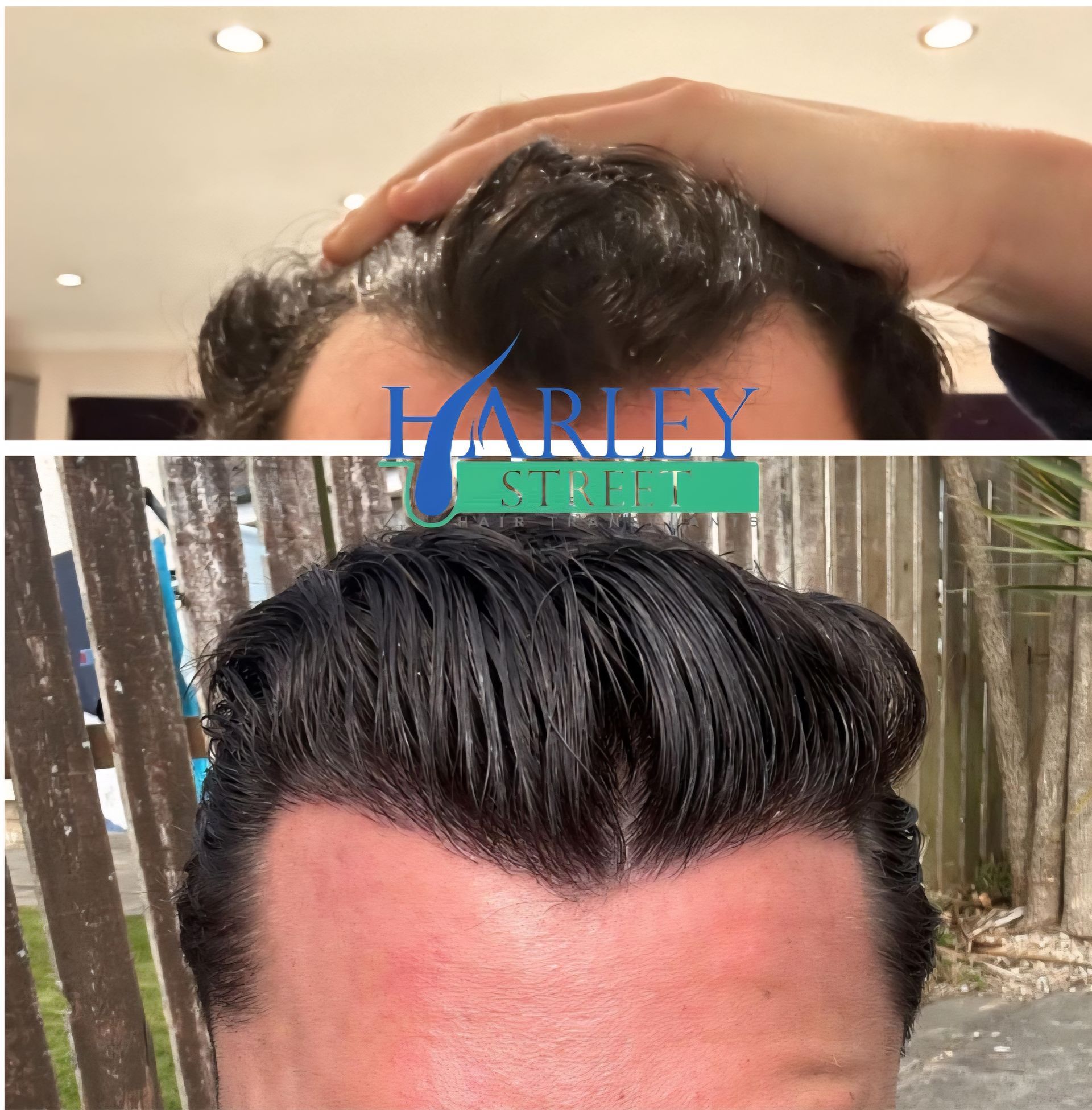
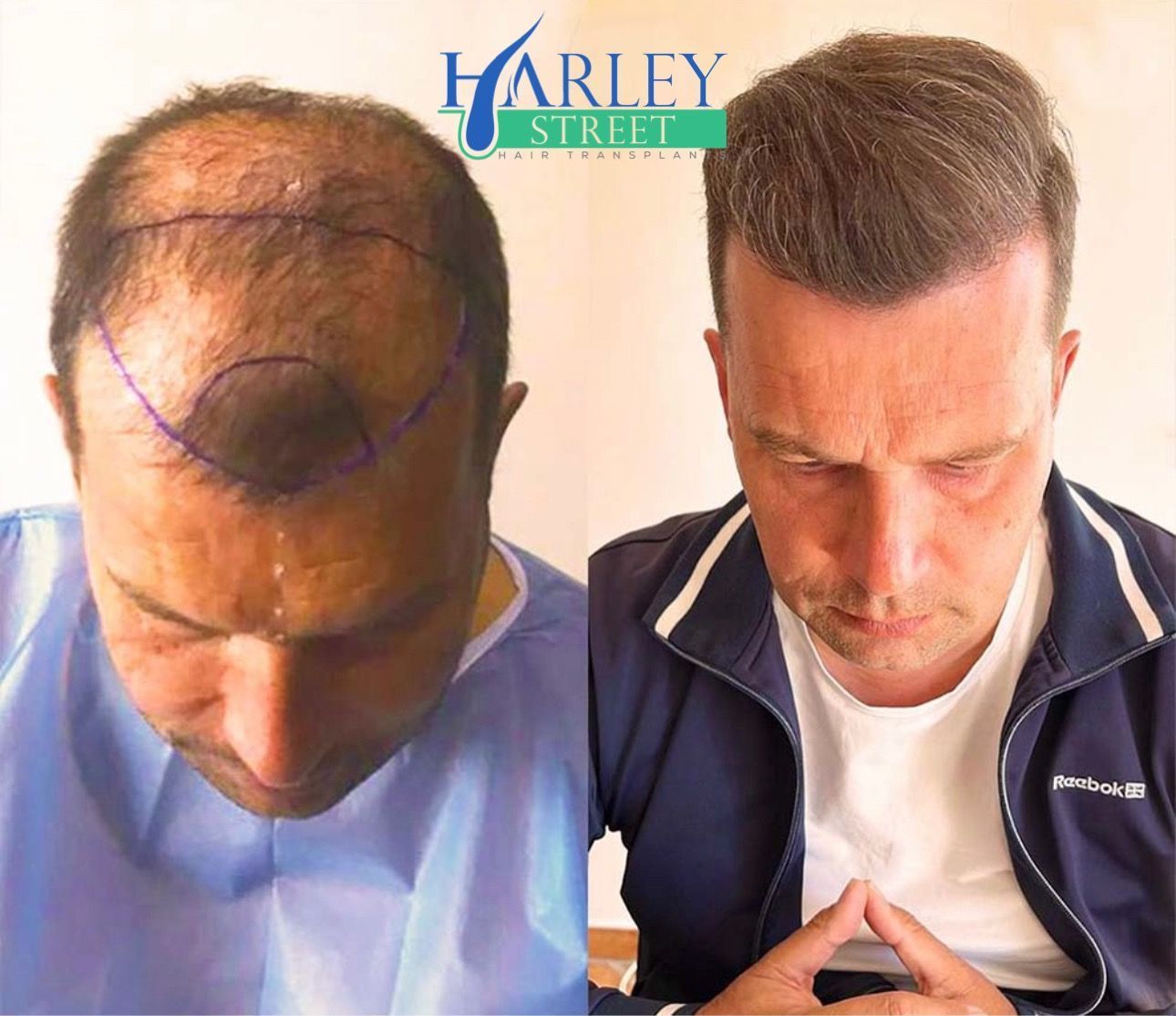
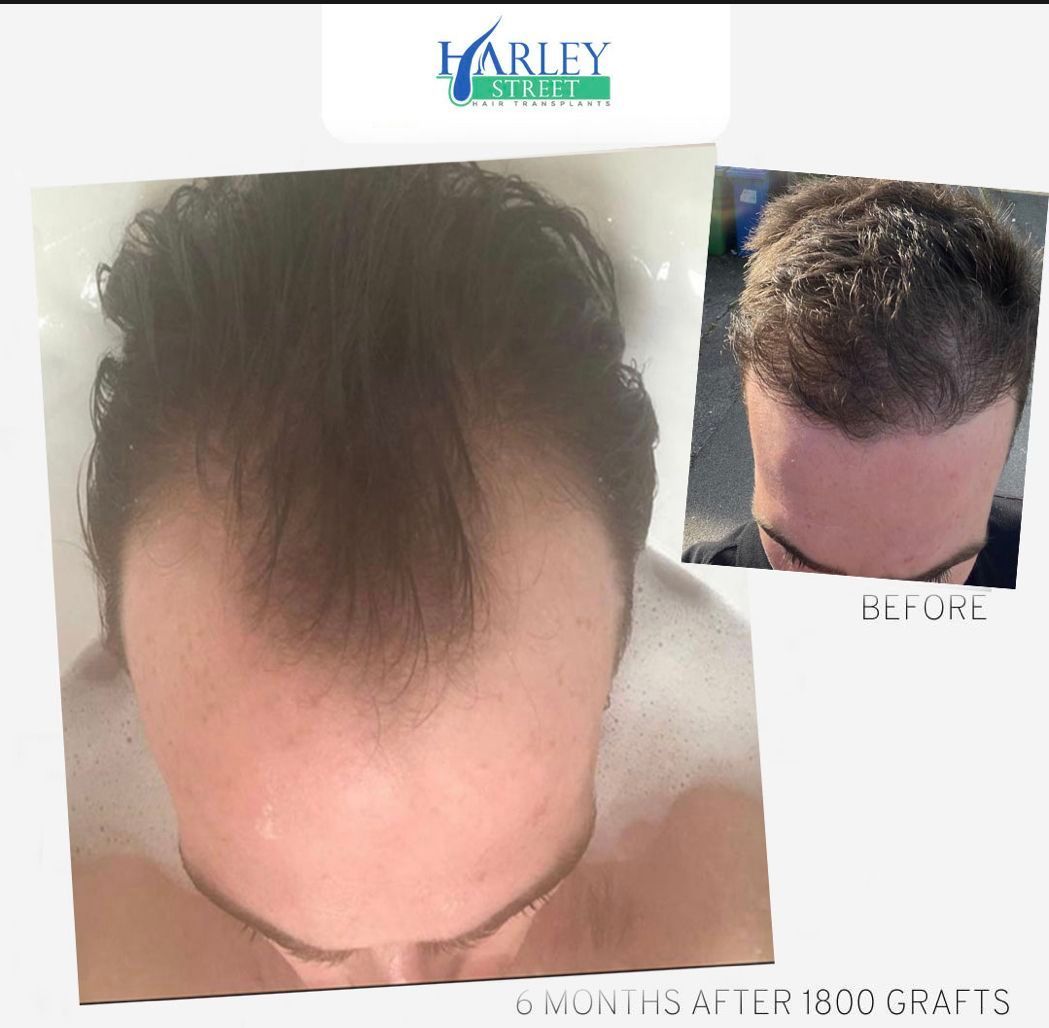
Liverpool FUE Results
These existing Liverpool images are retained from the current FUE page. Individual outcomes vary with the starting pattern, donor supply, graft survival, hair characteristics, healing and continuing hair loss.
Related Hair-Restoration Options

FUE
Individual graft harvesting with donor-density planning.

FUT
Strip harvesting with a linear donor closure.

PRP
A separate non-surgical option requiring realistic expectations.

Eyebrows
Fine placement planned around angle and direction.

Beard
Facial-hair design using suitable donor grafts.

Women
Diagnosis-led planning for suitable patterns of loss.
Related Liverpool Article
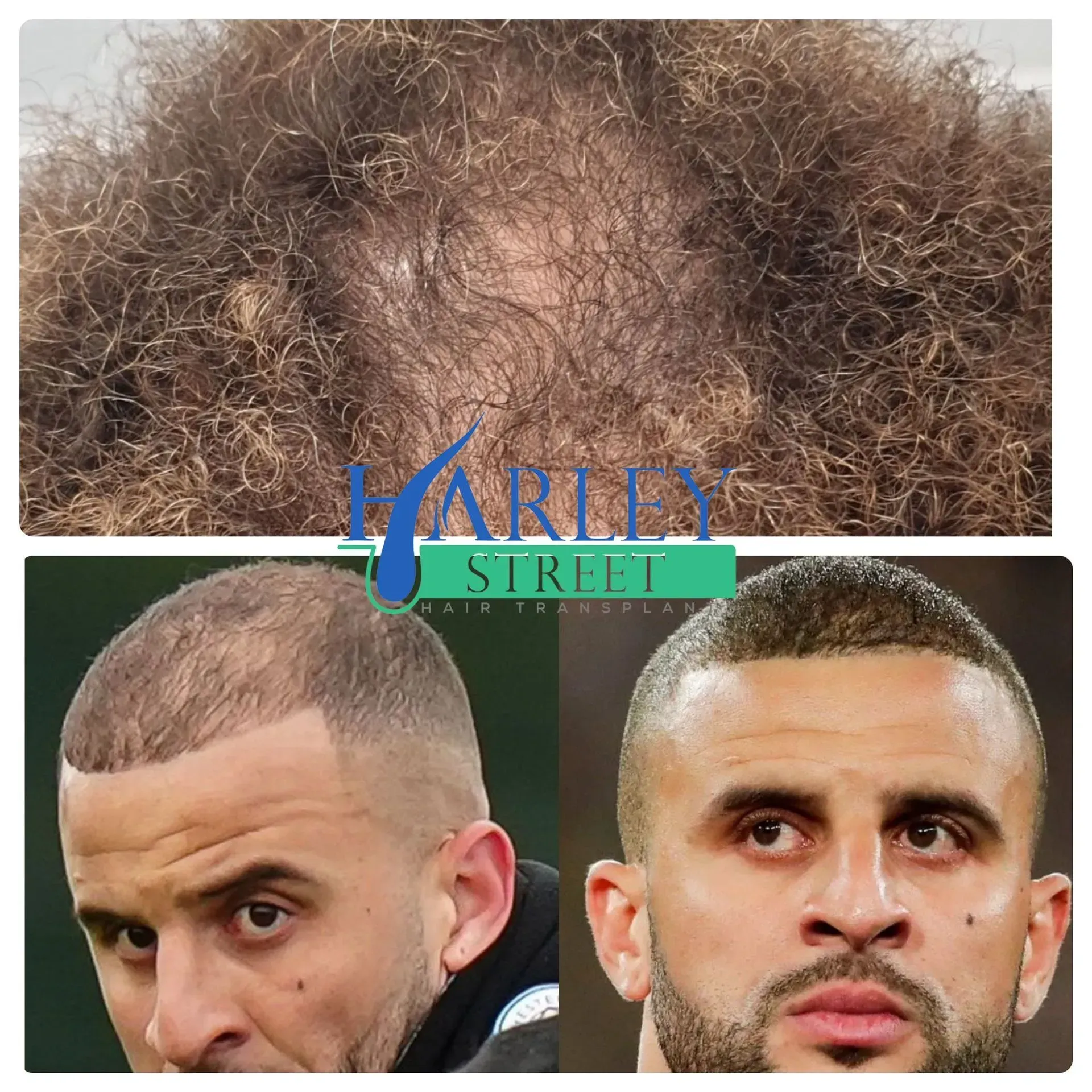
Did Kyle Walker Have a Hair Transplant?
A responsible look at public hairline speculation without presenting photographs as a medical diagnosis.
FUE Hair Transplant Questions
Does FUE leave scars?
Yes. FUE avoids a single linear donor scar, but every extraction creates a small wound that heals with a circular scar. Visibility depends on factors including punch size, extraction pattern, skin response, hair length and donor density.
How painful is FUE?
Local anaesthetic is used. The injections can be uncomfortable, and patients may notice pressure or movement during the procedure. Tenderness can occur as the anaesthetic wears off. Pain that is severe or worsening should be reported to the clinic.
How many grafts will I need?
A safe estimate requires examination of the recipient area and donor supply. The same visible area can require different plans depending on hair calibre, density, contrast, previous surgery and the amount of coverage that is realistic.
Will all transplanted hair shed?
No single shedding pattern applies to every patient. Some transplanted shafts may shed during early recovery, but the timing and amount vary. Native hair can also continue thinning for separate reasons.
Can FUE guarantee permanent results?
No responsible clinic should guarantee an outcome. Transplanted follicles are selected from donor areas expected to be more resistant to pattern loss, but growth, ageing, medical conditions, scarring and continuing loss of untreated hair can affect the long-term appearance.
Check the surgeon’s registration on the GMC medical register and read the CQC guidance on choosing cosmetic surgery.
